
In This Article
Anyone who has wrestled a floppy squeeze cup onto a stubborn trapezius knows the specific disappointment. The cup slides, the knot shrugs, and you’re left with a polite pink ring and nothing else. A professional cupping set with pump for deep tissue work fixes exactly that. You build the vacuum yourself, stroke by stroke, and release it with a flick of a valve the moment the tissue says enough.
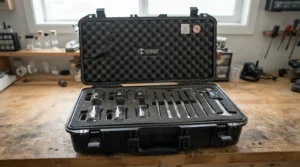
That control is the whole point. The 2026 market is crowded with kits promising “clinical” results at dinner-for-two prices, and in product photos they all look alike. They aren’t alike where it counts. Cup material, valve design, pump ergonomics and extension-tube reach decide whether a set survives a year of daily use or retires after one dropped cup on tile.
This guide compares seven real, widely sold sets, from Korean-made workhorses to polycarbonate and dual-pump kits. It draws on spec sheets and the aggregated sentiment of buyers. I haven’t handled any of these products, so you won’t find invented test diaries here. You’ll find the reasoning I’d want before spending money: what each spec means in practice, who each set suits, and where weak points tend to show up.
You’ll also see how adjustable suction control, deep tissue technique and professional-grade equipment durability fit together. Buying one without the others is how people end up with a drawer full of unused cups.
Professional Cupping Set With Pump for Deep Tissue: Quick Comparison
Start here if you’re skimming. Details, caveats and pricing logic follow in each product section.
| Set | Cups | Pump & Reach | Standout Trait | Best For |
|---|---|---|---|---|
| KS Premium 19-Cup Cupping Set | 19 (5 sizes) | Hand pump + extension tube | Huge review base, boil-safe plastic | All-round clinic and home use |
| Hansol Professional 30-Cup Cupping Set | 30 | Pump handle + extension line | Widest cup lineup | High-volume clinics |
| Myofascial Releaser Professional 18-Cup Cupping Set | 18 | Two hand pumps + tube | Built-in pump backup, polycarbonate | Practitioners who can’t afford downtime |
| KS Professional 17-Cup Cupping Set | 17 | Pistol-grip pump + tube | Hand-friendly pump, low entry cost | New practitioners, budget buyers |
| Cupping Warehouse Pro 20-Cup Set | 20 | Pump + flexible hose | Replaceable silicone valves | Clinics sterilizing between clients |
| ASCLE Super 12-Cup Cupping Set | 12 (4 sizes) | Pump + tube | Drop-tested, lightweight | Mobile therapists |
| DEFUNX 19-Cup Cupping Set | 19 (5 sizes) | Pump + long tube | Full-back count at a low tier | Value-minded home users |
Looking at the table, the KS Premium 19-Cup Cupping Set is the safest all-rounder. The Hansol Professional 30-Cup Cupping Set earns its premium only if you genuinely run back-to-back clients. Budget buyers should note that the KS Professional 17-Cup Cupping Set and the DEFUNX 19-Cup Cupping Set trade some impact toughness for price, which matters more in a busy treatment room than on a bedroom shelf.
💬 Just one click — help others make better buying decisions too!😊
What Is a Professional Cupping Set With Pump for Deep Tissue?
A professional cupping set with pump for deep tissue is a kit of rigid, heat-resistant cups paired with a hand-operated vacuum pump that lets a practitioner build suction gradually, hold it steadily, and release it instantly. It replaces fire or squeeze-bulb methods, giving repeatable pressure for dry cupping over thick muscle groups such as the back, glutes, and thighs.
Cupping itself is ancient. Wikipedia’s overview of cupping therapy traces it through Egyptian, Greek and Chinese traditions. It also sorts modern practice by method (fire, manual suction, electrical suction) and by suction strength (light, medium, strong). The same entry records skeptical critiques that question whether cupping outperforms placebo. Both facts are worth carrying into any purchase.
Here’s what that means for a buyer. The pump is the “professional” part. A fire cup is a one-shot gamble, and a silicone squeeze cup gives you whatever grip your thumb happens to produce. A pump set separates the decision to apply a cup from the decision about how hard it pulls. That separation matters most over dense tissue, where a cup needs enough lift to engage the layers beneath the skin without tipping into bruise territory.
Top 7 Picks for a Professional Cupping Set With Pump for Deep Tissue: Expert Analysis
These seven span budget, mid-range and premium tiers. Every comment below rests on published specs and aggregated buyer feedback. Specs and package contents vary by seller and region, so confirm details on the current listing before you buy.
1. KS Premium 19-Cup Cupping Set — the proven all-rounder with a giant review base
Review volume is rare in a niche therapy category, and KS Premium 19-Cup Cupping Set has it. Roundups cite well over ten thousand reviews. That means its failure modes are already documented rather than discovered on your dime.
The cup lineup runs across five diameters: thirteen 2-inch cups for broad muscle, stepping down to a single 1.1-inch cup for the jaw and fingers. In practice, the 2-inch majority lets you line up a full back without repositioning, while the small cups handle neck and forearm. The hand pump comes with an extension tube for reaching your own upper back. The plastic is described as shock- and heat-resistant and boil-safe, which matters for sterilizing between clients (confirm on the manufacturer’s label).
Based on the spec comparison, this is where I’d point a first-time clinic buyer. The soft spot is deep work on very large muscle: 2 inches is the biggest cup here, so glutes and quads may want larger options.
Reviewers consistently praise the controllable suction and the organized case. Recurring complaints are a thin manual and a tube that feels short to taller users.
Pros:
- ✅ Five cup sizes cover back to jaw
- ✅ Boil-safe, shock-resistant plastic
- ✅ Very large, well-documented review base
Cons:
- ❌ Largest cup is only 2 inches
- ❌ Manual is thin for beginners
Pricing sat in the mid-$50s to mid-$60s range at the time of research, so check current price. For this track record, that’s solid value.
2. Hansol Professional 30-Cup Cupping Set — the widest cup lineup for full-body sessions
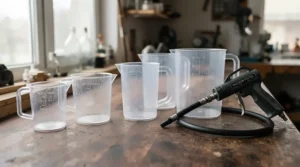
When a clinic needs to cup head to toe without recycling cups mid-session, Hansol Professional 30-Cup Cupping Set is the obvious candidate. It ships with a pump handle, an extension line and an English manual, and it’s made in Korea.
European listings of the HS-30 version spell out a useful lineup: eighteen cups of about 4.8 cm, a ladder of smaller sizes down to roughly 2.5 cm, larger 6.0 cm and 7.5 cm cups with counter-pressure inserts, two oval cups, and acupressure inserts. Confirm that this matches the US listing before you buy. If it does, the 7.5 cm cup (about 3 inches) is the real deep tissue asset, because glutes and quads reward a bigger seal. The ovals follow long muscle bellies like the erectors far better than round cups.
On paper this is the most capable single kit here for varied body types. Reviewers report strong, consistent suction across sizes and durability that holds up. The common complaints are a flimsy case and small cups shifting during transport.
Pros:
- ✅ Largest cup count and size range
- ✅ Heat- and shock-resistant construction
- ✅ English manual and extension line included
Cons:
- ❌ Case feels flimsy for travel
- ❌ Overkill for occasional solo use
Listings ranged from roughly $70 to $170 depending on seller. Shop around, because the premium is only worth paying if you use the volume.
3. Myofascial Releaser Professional 18-Cup Cupping Set — two pumps, so downtime never happens
The detail that sells Myofascial Releaser Professional 18-Cup Cupping Set is mundane and smart: two hand pumps. Pumps are the part that wears out first, and a clinic can’t cancel a client because a valve sticks.
The kit uses BPA-free polycarbonate cups, which are clearer than standard plastic. You can watch skin color change through the wall and adjust suction accordingly. It adds an extension tube, an illustrated booklet, a hard-shell case, and twelve magnetic inserts. Listings also advertise a lifetime cup-replacement guarantee, so read the terms before relying on it.
Treat the magnets as optional. Evidence for magnetic add-ons is thin, and ISO 5227:2022 explicitly excludes cups with magnetism from its scope. For deep tissue work, the real value is redundancy plus visibility.
Reviewers like the beginner-friendly booklet and backup pump. They complain about hose durability, a bulky case, and the occasional defective cup on arrival.
Pros:
- ✅ Two pumps for built-in redundancy
- ✅ Clear polycarbonate shows skin response
- ✅ Illustrated booklet helps newcomers
Cons:
- ❌ Hose quality draws complaints
- ❌ Case is bulky to transport
I couldn’t verify a stable current price. It sits above entry-level kits, so check current price. The value is strongest for professionals who treat downtime as a cost.
4. KS Professional 17-Cup Cupping Set — the pistol-grip pump that spares your hand
Ten cups into a session, your grip tells you what the manufacturer thought about ergonomics. KS Professional 17-Cup Cupping Set uses a pistol-grip pump that works with a single-handed squeeze, plus an extension tube and a carrying case. It’s made in Korea, and the listing shows roughly 4.6 stars across 3,000+ ratings.
That pump design suits adjustable suction control. Small, incremental squeezes let you creep up on the right pressure instead of overshooting. The cup lineup mirrors its pricier sibling, with a majority of 2-inch cups plus a few small sizes for face and neck.
The analytical catch is durability under heavy use. Standard plastic is less forgiving than polycarbonate when cups get dropped daily.
Buyers praise the strong suction, the pain relief, and the carrying case. They also mention lingering circular marks, cups occasionally loosening, and difficulty reaching the shoulder-blade area. A few reports describe cracked cups, so inspect everything on arrival.
Pros:
- ✅ Pistol-grip pump reduces hand fatigue
- ✅ Low entry cost for a Korean-made kit
- ✅ Small cups suit face and neck
Cons:
- ❌ Plastic is less durable under daily drops
- ❌ Cups can pop off on bony areas
Pricing sat under $40 at the time of research, so check current price. Value is excellent for new practitioners and low-volume users.
5. Cupping Warehouse Pro 20-Cup Set — replaceable silicone valves where cups usually fail
The valve is the failure point in most pump cups. Cupping Warehouse Pro 20-Cup Set addresses it with removable silicone valves, according to roundup listings, so a worn valve means a replacement part rather than a dead cup.
The twenty cups are polycarbonate, and the kit adds a hand pump, a flexible extension hose and a canvas bag. Polycarbonate clarity helps you read skin response. Replaceable valves also reduce total cost of ownership, which is why this set belongs in any discussion of professional-grade equipment durability. The flexible hose is comfortable to maneuver but may transfer slightly less force per stroke than a rigid tube.
For clinics that boil or disinfect cups between clients, this design logic is the strongest in the lineup. Reviewers praise customer service and easy release. Some report cups losing suction over time and mixed opinions on pump quality, so test every cup when the kit arrives.
Pros:
- ✅ Removable silicone valves extend cup life
- ✅ Clear polycarbonate cups
- ✅ Extension hose and canvas bag included
Cons:
- ❌ Some buyers report suction fade
- ❌ Pump feels less robust than premium options
I couldn’t verify a stable current price. Expect a mid-range tier, so check current price. The value case is strongest over multi-year clinic use.

6. ASCLE Super 12-Cup Cupping Set — drop-tested build in a travel-light kit
Mobile practitioners live in the back seat of a car. ASCLE Super 12-Cup Cupping Set weighs about 1.37 pounds and is listed as shockproof, heatproof and 7-foot drop-tested. That is a manufacturer claim, but it’s a useful signal for people who carry kits daily.
The twelve cups come in four sizes (2.8, 2.4, 2.1 and 1.8 inches), three of each. That grouping lets you set a matching row along the spine. Notably, the 2.8-inch top size is larger than the 2-inch workhorses in the KS kits, which helps over thick muscle. The kit includes a pump, an extension tube, replacement seals, a carrying case, and BPA- and phthalate-free materials.
The trade-off is volume. Twelve cups won’t cover two clients at once. Buyers praise durability and light weight. They report occasionally missing extras and instructions that stay basic.
Pros:
- ✅ Listed as drop-tested and heatproof
- ✅ Larger 2.8-inch cups for thick muscle
- ✅ Replacement seals included
Cons:
- ❌ Twelve cups limit simultaneous coverage
- ❌ Some buyers report missing accessories
I couldn’t verify a stable current price. It sits in a budget-to-mid tier, so check current price. Value is strong for travelers and solo therapists.
7. DEFUNX 19-Cup Cupping Set — a full-back cup count at an entry-level tier
If you want nineteen cups, a pump and a long tube without a premium invoice, DEFUNX 19-Cup Cupping Set is the budget pick. Five cup sizes cover back, shoulder and leg. One roundup lists a tube of roughly 27 inches, which is generous for self-treatment, and the kit adds a gua sha tool.
Cup count translates directly into session speed. Seven or eight cups along the back saves minutes of repositioning. The compromise sits in the materials: standard plastic is less impact-tolerant than polycarbonate, so it suits careful handlers better than a busy treatment room.
Buyers report strong suction and appreciate the coverage. They also note unclear instructions and a valve-release technique that takes a few sessions to master. Plan on watching a tutorial and practicing before treating anyone else.
Pros:
- ✅ Nineteen cups across five sizes
- ✅ Long tube eases self-treatment
- ✅ Gua sha tool included
Cons:
- ❌ Plastic is less impact-tolerant
- ❌ Valve technique has a learning curve
I couldn’t verify a stable current price. It sits in a budget-to-mid tier, so check current price. Value is best for home users scaling up.
Here’s how the seven stack up on the specs that decide deep tissue performance:
| Set | Cups | Material | Approx. Price Range | Review Signal | Best For |
|---|---|---|---|---|---|
| KS Premium 19-Cup Cupping Set | 19 | Shock/heat-resistant plastic | Mid-$50s to mid-$60s | 14,000+ reviews cited by roundups | General clinic use |
| Hansol Professional 30-Cup Cupping Set | 30 | Heat/shock-resistant plastic | ~$70–$170 by seller | 900+ reviews cited, around 4.7 stars | Busy full-body practices |
| Myofascial Releaser Professional 18-Cup Cupping Set | 18 | Polycarbonate | Mid-to-upper tier (verify) | Not verified | Redundancy-minded pros |
| KS Professional 17-Cup Cupping Set | 17 | Plastic | Under $40 | ~4.6 stars, 3,000+ ratings | Beginners |
| Cupping Warehouse Pro 20-Cup Set | 20 | Polycarbonate | Mid-range tier (verify) | Not verified | Frequent sterilizers |
| ASCLE Super 12-Cup Cupping Set | 12 | Shockproof, heatproof | Budget-to-mid (verify) | Not verified | Mobile therapists |
| DEFUNX 19-Cup Cupping Set | 19 | Plastic | Budget-to-mid (verify) | Not verified | Home users |
The review column matters. Only the KS and Hansol kits have large, well-documented review bases, so their weaknesses are known. The others may be excellent, but there’s less public evidence either way. If you’re a clinic buying on durability, favor the sets with a track record or a replaceable-part design, and treat the rest as a calculated bet.
How to Choose Professional Grade Pump Cupping Equipment
Choosing professional grade pump cupping equipment is mostly a matter of checking six things in the right order.
- Match cup material to your workload. Polycarbonate tolerates drops and repeated sterilization and lets you see skin response. Shock-resistant plastic is the workhorse for lighter use.
- Check the size range, not just the count. For deep tissue, make sure at least a couple of cups run larger than 2 inches. Small cups should reach the neck and jaw.
- Judge the pump’s ergonomics. A pistol grip or a dual-pump kit saves your hand across ten-cup sessions, and a smooth release valve protects your client’s skin.
- Confirm reach. An extension tube or hose of around 24 inches or more makes self-treatment realistic. Rigid tubes transfer more force, while flexible hoses are easier to maneuver.
- Inspect valve and seal design. Replaceable valves and spare seals cut long-term cost.
- Verify sterilization and warranty. Boil-safe cups and a clear replacement policy matter more than a flashy case.
A seventh, quieter check: confirm what’s actually in the box. Several listings mention accessories that some buyers report missing. A short checklist on delivery day saves a return headache.
Deep Tissue Cupping Tools With Pump Control: What Actually Changes Under the Cup
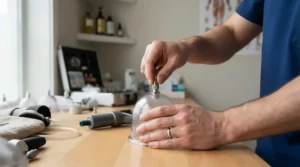
Deep tissue cupping tools with pump control change one variable you can’t easily manage elsewhere: how quickly and how far suction builds. With a fire cup, the vacuum is set the moment you place it. With a pump, you add pressure in increments and stop the moment the skin lifts the way you want.
That is the practical meaning of adjustable suction control. Wikipedia’s categories of light, medium and strong suction describe the range. A hand pump lets you land on any of them deliberately, and the release valve lets you back off instantly if a client winces. Based on the spec comparison, pistol-grip pumps make small increments easier, and rigid tubes translate hand force more efficiently than flexible hoses.
Be cautious about equating “deep” with “hard.” Stronger suction brings more marking and more risk. Dense tissue often responds better to a larger cup at moderate pressure held a bit longer than to a small cup cranked tight. A useful habit is to count pump strokes per placement and note them in the client record, so you can reproduce a comfortable setting next visit.
On the evidence side, an evidence-mapping study in Frontiers in Neurology found no high-quality evidence for cupping on pain outcomes. It found very low to moderate-quality evidence suggesting benefit for conditions like low back pain, neck pain and knee osteoarthritis. The takeaway is balanced: precise tools are valuable, but they don’t turn modest evidence into guaranteed results.
Pump Cupping vs Silicone, Fire and Electric Alternatives
Pump cupping isn’t the only way to create suction, and honest comparisons help you decide whether it’s right for your practice.
| Method | Suction Control | Deep Tissue Suitability | Main Drawback | Best For |
|---|---|---|---|---|
| Hand-pump rigid cups | Incremental, with a release valve | Strong | Parts to maintain, valve learning curve | Clinics and serious home users |
| Silicone squeeze cups | Limited, set by squeeze | Moderate | Weaker grip, less fine adjustment | Gliding work, beginners, travel |
| Fire cupping (glass) | Fixed at placement | Strong but unpredictable | Burn risk, requires training | Trained traditional practitioners |
| Electric cupping devices | Preset levels, often with heat | Varies | Higher cost, battery dependence | Tech-minded single-area use |
Silicone squeeze cups shine for gliding and for people who dislike valves. Reviewers of silicone sets often note that suction can’t be fine-tuned and cups may pop off on some areas. Electric devices offer convenience and adjustable levels but typically treat one area at a time.
For multi-cup deep tissue work with repeatable pressure, a pump set remains the most flexible option. If your practice leans heavily on sliding techniques, consider pairing a pump kit with a small silicone set rather than forcing one tool to do everything.
Deep Tissue Technique: A Step-by-Step Usage Guide
Good tools still need good technique. This sequence works for most static, pump-based sessions. Adapt it to your training and local scope of practice.
- Screen first. Check for contraindications (see the safety section), open skin, sunburn, and medications like blood thinners.
- Warm the tissue. A few minutes of light massage or a warm towel makes the skin and fascia more forgiving.
- Choose cup size by muscle mass. Larger cups for glutes, thighs and erectors; smaller ones around the scapula and neck.
- Apply a thin layer of oil if you plan to glide. For static placements, clean dry skin seals best.
- Pump slowly. Two or three strokes, check the skin lift, then decide. Stop earlier than you think you need to.
- Time it conservatively. Many guides suggest starting with roughly five to ten minutes per area for newcomers. Clinic protocols vary, so follow your training.
- Release gently. Press the valve in small bursts rather than yanking cups, then wipe, record the settings, and hydrate.
A 2025 meta-analysis in BMJ Open reported a meaningful reduction in pain intensity for chronic musculoskeletal pain, rated moderate quality. It also showed very high variability between studies. In plain terms, results are promising but inconsistent, so set client expectations accordingly and track outcomes rather than promising miracles.
Adjustable Suction Pump Cupping Set for Clinics: Three Real-World Setups
Matching equipment to your actual workflow beats buying the most impressive spec sheet. Here are three illustrative profiles, built on spec logic rather than anyone’s personal testing.
The mobile massage therapist. Budget is modest, you see six to eight clients a week across three locations, and the kit lives in a car. The ASCLE Super 12-Cup Cupping Set fits the use case with its light weight and drop-tested claim. Three cups in each of four sizes lets you line up a row along the spine.
The busy sports-rehab clinic. You treat many clients a day, sterilize constantly, and drop cups regularly. The Hansol Professional 30-Cup Cupping Set provides volume and size range. The Cupping Warehouse Pro 20-Cup Set adds replaceable valves that cut long-run maintenance. Either way, plan for a spare pump.
The new practitioner adding cupping. You want professional results without committing a big budget. The KS Professional 17-Cup Cupping Set gets you started cheaply, and the KS Premium 19-Cup Cupping Set is the natural step up when volume grows. Both let you practice adjustable suction control on real clients.
For clinics, an adjustable suction pump cupping set for clinics is only as reliable as your cleaning routine. Build sterilization time into your schedule, and rotate cups so no set is always wet from the last client.
✨ Ready to Build Your Treatment Room Kit?
🔍 Take your deep tissue sessions to the next level with these carefully selected sets. Click on any highlighted product name to check current pricing and availability. The right pump puts consistent, adjustable pressure in your hands, session after session!

Professional-Grade Equipment Durability and Long-Term Cost
Sticker price is a poor guide to what a cupping set costs you. Professional-grade equipment durability is about how many sessions each dollar buys before something cracks, leaks or loses its seal.
The wear points are predictable. Valves and seals fade first, cups crack from drops, and pumps eventually lose their bite. Polycarbonate and replaceable-valve designs, like the Cupping Warehouse Pro 20-Cup Set and the Myofascial Releaser Professional 18-Cup Cupping Set, address those failures directly. The ASCLE Super 12-Cup Cupping Set emphasizes impact resistance with spare seals included.
A quick illustration: a clinic running 20 sessions a week for two years performs about 2,000 sessions. A $60 kit works out to roughly three cents per session before replacements. That makes a cheap kit that dies in six months more expensive than a sturdier one at double the price.
| Tier | Example Sets | Approx. Range | Value Logic | Best For |
|---|---|---|---|---|
| Entry | KS Professional 17-Cup Cupping Set, DEFUNX 19-Cup Cupping Set | Under about $40 (verify) | Lowest cost, more fragile | Beginners, light use |
| Mid | KS Premium 19-Cup Cupping Set, ASCLE Super 12-Cup Cupping Set, Cupping Warehouse Pro 20-Cup Set | Roughly $50–$80 (verify) | Best durability per dollar | Most clinics |
| Premium | Hansol Professional 30-Cup Cupping Set, Myofascial Releaser Professional 18-Cup Cupping Set | Roughly $70–$170 (verify) | Volume or redundancy | High-volume practices |
Mid-tier sets give the best balance of durability and cost for most practitioners. Premium only pays off if you truly use the volume or need redundancy. Entry-tier kits are fine for learning, but budget for earlier replacement if you work with them daily.
Common Mistakes When Buying a Pump Cupping Set
Buying by cup count alone. Thirty cups of the wrong sizes are worse than seventeen well-chosen ones. Check the size spread and whether any cup suits large muscle groups.
Ignoring valve and seal design. Valves are the usual failure point. If a listing doesn’t mention replaceable parts, assume a damaged valve means a lost cup.
Trusting magnets as a feature. Magnetic inserts are an optional extra with limited evidence behind them. Don’t pay a premium for them unless clients specifically ask.
Skipping the sterilization question. If you cup multiple clients, you need cups that tolerate boiling or disinfecting. Confirm it on the manufacturer’s label rather than a roundup.
Forgetting the pump. Pump ergonomics decide whether you enjoy using the kit. A pistol grip or a spare pump can be worth more than two extra cups.
Fixing the Five Most Common Pump Cupping Problems
Cups keep popping off. Check for oil on the rim, dry the skin, and avoid bony or very curved areas. Larger cups seal better on flat muscle. If one cup always fails, replace its seal or the cup.
Slow leak after a few minutes. Inspect the valve for debris or warping. Sets with replaceable valves, like the Cupping Warehouse Pro 20-Cup Set, make this a quick fix.
Marks darker than expected. Reduce strokes, shorten the time, and check any blood-thinning medication. Marks fade over days, but heavy ones signal you went too hard.
Hand fatigue. Switch to a pistol-grip pump like the KS Professional 17-Cup Cupping Set, or use the second pump in the Myofascial Releaser Professional 18-Cup Cupping Set to alternate.
Can’t reach the shoulder blade. Use the extension tube, adjust your positioning, or have a partner place cups. A longer tube, like the one listed with the DEFUNX 19-Cup Cupping Set, helps solo users.
Safety, Standards and What the Evidence Says
Cupping is generally low-risk, but low-risk isn’t no-risk. A review of adverse effects in musculoskeletal and sports rehabilitation found the incidence of adverse events very low, with moderate evidence for improved soft-tissue flexibility. Broader safety literature describes adverse events as infrequent but not rare, mostly mild to moderate, and often preventable with hygiene and training.
Common cautions include avoiding open wounds, sunburn, active skin infection and numb areas. People with bleeding disorders, those on blood thinners, and those with heart conditions should get medical clearance first. Pregnant clients need practitioner guidance.
For clinics, standards matter. ISO 5227:2022 specifies safety controls for cupping devices that use air suction. It covers plastic, glass, rubber, ceramic and silicone cups and excludes natural materials like bamboo and cups with added magnetism or infrared. ISO 19611:2017 covers air-extraction cupping devices, including sterilization and packaging. Medical-device databases list cupping cups under a GMDN “cupping therapy device” term.
None of this replaces your jurisdiction’s rules. Check your state board and insurer. Reliable pump hardware reduces risk, but training, screening and hygiene do most of the protecting.
Frequently Asked Questions
❓ Can a hand pump cupping set handle deep tissue work on large muscles?
❓ How many cups does a clinic actually need in a professional cupping set with pump?
❓ Are polycarbonate cups worth the extra cost over standard plastic?
❓ How often should valves and seals be replaced on pump cupping equipment?
❓ Can I use a professional cupping set with pump for self-treatment at home?
Conclusion
The best professional cupping set with pump for deep tissue work is the one that matches how you actually practice. For most clinics and serious home users, the KS Premium 19-Cup Cupping Set is the safest bet. It offers a proven review base, a sensible size range and boil-safe plastic. High-volume practices should look at the Hansol Professional 30-Cup Cupping Set, and those who value redundancy will appreciate the dual pumps in the Myofascial Releaser Professional 18-Cup Cupping Set. If valves and long-term wear worry you, the Cupping Warehouse Pro 20-Cup Set targets them head-on. Budget buyers and travelers have good options in the KS Professional 17-Cup Cupping Set, the ASCLE Super 12-Cup Cupping Set and the DEFUNX 19-Cup Cupping Set.
Whatever you choose, remember what the pump is for: adjustable suction control and repeatable pressure, not maximum pull. Pair the equipment with careful screening, a conservative deep tissue technique and a real sterilization routine. Evidence for cupping is encouraging but modest, so set expectations honestly. Verify current prices and package contents before ordering, because both change often.
Recommended for You
- Cupping Set For Facial Cupping Therapy: 7 Best Picks In 2026
- Cupping Sets Under $50 For Massage Clinics: 7 Best Picks (2026)
- Cupping Set For Athletes And Recovery: 7 Best Picks (2026)
Disclaimer: This article contains affiliate links. As an Amazon Associate, I earn from qualifying purchases. If you purchase products through these links, we may earn a small commission at no additional cost to you.
✨ Found this helpful? Share it with your friends! 💬🤗
