In This Article
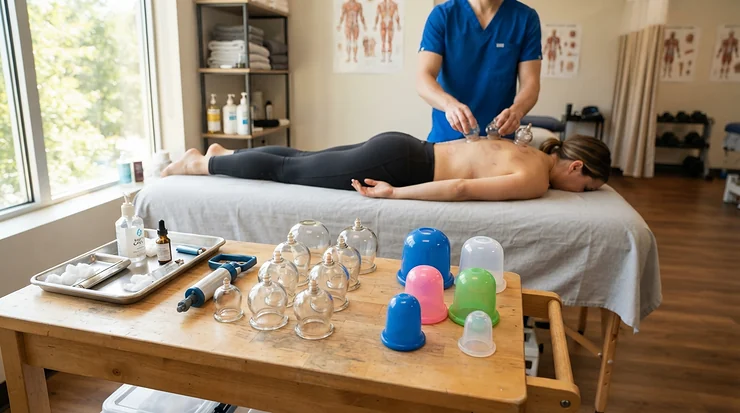
A cupping set for athletes and recovery is a kit of suction cups (hand-pumped, silicone, or battery-powered) that lifts skin and the tissue beneath it to ease soreness, improve range of motion, and support post-training recovery. Athletes typically place the cups on quads, calves, shoulders, and backs for a few minutes per spot.

Remember the swimmer with the polka-dot back? Those circles turned cupping from a niche practice into a locker-room conversation. Since then the tools have changed a lot. Flame and glass gave way to pumps, squeezable silicone, and cordless cups that heat, vibrate, and glow red.
Here’s the honest part. A systematic review of randomized controlled trials in amateur and professional athletes found reported benefits for pain, range of motion, and creatine kinase levels. It also found that most trials carried unclear or high risk of bias, and the authors declined to recommend for or against cupping. So treat a cupping set for athletes and recovery as a low-cost, low-tech recovery option. It is not a miracle.
This guide covers seven real products across budget, mid-range, and premium tiers. It also covers how to run a cupping set for athletic training rooms, how to size recovery cupping tools for sports teams, and how to keep team sports equipment budgets sane. You’ll find realistic routines for post workout muscle recovery too. Prices below are ranges only, so check current pricing before you buy.
Quick Comparison: Cupping Set for Athletes and Recovery at a Glance
| Product | Type | Price Range (approx.) | Best For |
|---|---|---|---|
| Therabody TheraCup | Electric, heat + vibration | Roughly $150–$200 | Pro-style dosing, solo athletes |
| REVO 4-in-1 Smart Cupping Massager | Electric, heat + red light | Roughly $60–$80 | Entry-level electric |
| Achedaway Cupper | Electric, dynamic suction | Roughly $100–$150 | Rhythmic, app-guided sessions |
| KS Premium 19-Cup Set | Pump-driven kit | Under $40 | Trainers treating others |
| MUCHOO 22-Cup Set | Pump-driven kit | Under $40 | Budget-minded teams |
| Soapow Electric Cupping Set | Budget electric | Roughly $30–$60 | Testing electric cupping |
| KangZhu 12-Cup Silicone Set | Silicone squeeze | Under $30 | Travel and beginners |
Ranges are approximate and may vary. Check current price on the retailer page.
Read the table by who holds the cup. A trainer working on someone else’s back wants cup variety and a pump, which points to the KS Premium 19-Cup Set or the MUCHOO 22-Cup Set. An athlete working alone wants suction that holds itself, so the REVO 4-in-1 Smart Cupping Massager or Therabody TheraCup make more sense. The KangZhu 12-Cup Silicone Set wins on sheer portability.
💬 Just one click — help others make better buying decisions too!😊
Top 7 Cupping Set for Athletes and Recovery Picks: Expert Analysis
Each pick below translates specs into practical meaning. Review sentiment is summarized from published reviews and roundups, and where I couldn’t verify a deep review pool, I say so.
1. Therabody TheraCup — pro-style cupping with heat and vibration
The Therabody TheraCup stacks suction, heat, and vibration in one cordless cup, which is closer to a clinic cart than a bargain-bin kit.
The specs are tidy. Suction runs at 30, 40, and 50 kPa, heat at 41°C, 43°C, and 45°C, and three vibration modes round it out. It ships with 35 mm, 45 mm, and 55 mm cups. It auto-shuts off after three minutes and cuts out if pressure exceeds 60 kPa. Those numbers mean something. The three-minute cap is a guardrail against the “more is better” instinct, and the 120-minute battery covers a full training-room afternoon. The cup sizes span forearm-to-quad territory.
Based on the spec comparison, this suits athletes who want repeatable dosing and trainers who want a standardized setting across many bodies. The trade-off is one cup, one spot at a time.
Therabody’s own product page showed roughly a 4.5-out-of-5 rating at the time of research, and Best Buy shoppers frequently mention ease of use and battery life. A common caution from one reviewer is that suction feels lighter than traditional cupping. Brand-hosted reviews can skew positive, so weigh them accordingly.
Pros:
- ✅ Three suction, heat, and vibration levels each
- ✅ Built-in auto-shutoff and over-pressure cutoff
- ✅ Long battery life, USB-C charging
Cons:
- ❌ Lighter pull than manual pump sets
- ❌ Highest price in this lineup
Price and verdict: Premium, in the $150–$200 range. Worth it if safety limits and consistency matter more than raw suction.
2. REVO 4-in-1 Smart Cupping Massager — the friendliest way into electric cupping
The REVO 4-in-1 Smart Cupping Massager solves the reason most home kits end up in a drawer: nobody wants to pump a cup on their own back.
It’s a single cordless cup with dynamic suction, heat up to 122°F (50°C), vibration, and red light. Manufacturer materials describe red light in the 630–670 nm band, and 12 manual intensity levels let you start gentle. There is no app. On paper that means easy control but not much customization. Treat the red light as a bonus, since its benefit for athletic recovery isn’t established.
One independent review concludes it’s worth buying if you cup alone and keep abandoning hand pumps, but not if you want to cover a whole back in one session. That matches the spec logic: one cup means sequential treatment.
Build-quality feedback is mixed in published reviews. Some call it well made, while others report it feels fragile. The listing advertises a two-year replacement policy, so keep your receipt.
Pros:
- ✅ Self-generating suction, no pump hand needed
- ✅ Twelve intensity levels for gentle starts
- ✅ Heat, vibration, and red light included
Cons:
- ❌ Mixed build-quality feedback in reviews
- ❌ One cup limits full-back sessions
Price and verdict: Mid-range, roughly $60–$80. Strong value for solo athletes.
3. Achedaway Cupper — rhythmic “breathing” suction
The Achedaway Cupper doesn’t just hold suction. It alternates suction and release, aiming to mimic a therapist’s pumping rhythm.
It offers five suction modes and five intensity levels and adds red light and app control, according to published comparisons. That rhythm can feel more like massage than a static hold, though I wouldn’t promise it changes marking or outcomes. Think of the app as convenience, not therapy.
Based on the feature set, this fits athletes who find static cupping boring or too intense and enjoy tweaking settings. Comparison writers describe the experience as powerful and sometimes more clinical than REVO’s heat-forward feel.
Here’s a transparency note: on at least one retailer page the review pool was only two reviews, both positive. That’s too thin to draw conclusions. Read multiple sources before buying.
Pros:
- ✅ Five suction modes with five intensity levels
- ✅ Pulsing suction-and-release rhythm
- ✅ App control plus red light
Cons:
- ❌ Thin verified review pool at time of research
- ❌ Can feel intense for sensitive skin
Price and verdict: Mid-to-premium, roughly $100–$150. Good if you want customization; verify current price and reviews.
4. KS Premium 19-Cup Cupping Set — widest cup variety for classic technique
The KS Premium 19-Cup Cupping Set is the old-school answer: many cups, one pump, total control.
Independent roundups rank it highly. One placed it first for balancing affordability and durability, and another listed it as the pick for traditionalists. Nineteen cups typically means small cups for forearms, shins, and joints and larger ones for quads and back. A pump lets you build suction gradually, which beats a preset when a body part is cranky.
Based on the spec comparison, this shines when one person cups another, which is exactly the athletic training room scenario. It’s awkward for self-treating your own back. One recurring caveat across roundups is that the pump is the weak link in any pump-driven set. A smaller set with a good pump beats a giant set that leaks suction.
I couldn’t verify a deep, independent review pool for this specific kit, so lean on the roundup consensus and check recent buyer feedback.
Pros:
- ✅ Nineteen cups cover many muscle groups
- ✅ Gradual, pump-controlled suction
- ✅ Highly ranked in independent roundups
Cons:
- ❌ Pump durability is the usual weak point
- ❌ Hard to use on your own back
Price and verdict: Budget, under about $40. Excellent value for training rooms.
5. MUCHOO 22-Cup Cupping Set — accessory-heavy value kit
The MUCHOO 22-Cup Cupping Set earns its place by stuffing more into the box than most budget rivals.
One 2026 roundup describes it as value-packed, with more accessories than most competitors. Contents vary by listing, so confirm the pump, extension tube, and cups you’ll actually receive. More cups help only if sizes match your use. Twenty-two cups of the wrong diameters is just clutter.
Analytically, this is a smart buy for a coach outfitting a small team on a thin budget, because the cup count lets several athletes be treated per session if you add a second pump. It also suits athletes who want to learn technique before spending real money.
Independent review depth was limited in my research, beyond roundup-level praise. That’s a reason to inspect the return policy, not a reason to skip it.
Pros:
- ✅ Large cup count for varied body areas
- ✅ Generous accessories compared with rivals
- ✅ Low cost makes multiple kits affordable
Cons:
- ❌ Contents differ across listings
- ❌ Limited independent review depth found
Price and verdict: Budget, under about $40. Strong value if the cup sizes fit your needs.
6. Soapow Electric Cupping Set — low-cost electric experiment
The Soapow Electric Cupping Set is the “let me see if I even like electric cupping” option.
Product Review Crew ranked it fourth in its 2026 comparison as the best budget-friendly electric choice. I couldn’t independently verify its full spec sheet, so check suction levels, cup count, and charging type on the listing. Budget electric kits vary widely. That’s the main thing a spec sheet won’t tell you.
Based on positioning, this suits an athlete who wants no-pump convenience without committing to premium pricing. If you love it, you’ve learned what you need before upgrading to a Therabody TheraCup. If you hate it, you’re out a modest sum.
Verifiable review depth was limited, so keep expectations calibrated and read recent buyer feedback.
Pros:
- ✅ Hands-free suction without pumping
- ✅ Low-cost entry into electric cupping
- ✅ Ranked as a budget pick by reviewers
Cons:
- ❌ Specs less documented than premium rivals
- ❌ Feature set may be thinner than pricier units
Price and verdict: Budget, roughly $30–$60. Reasonable trial purchase.
7. KangZhu 12-Cup Silicone Cupping Set — pack-anywhere silicone
The KangZhu 12-Cup Silicone Cupping Set weighs almost nothing and fears nothing, which makes it the travel king.
Swimmer Living describes the set as including 12 cups of varying diameters at an accessible price, enough for a full-body setup treating several zones at once. Silicone works by squeezing the cup, so suction is gentler and less adjustable than pump kits. A separate roundup notes that plastic pump sets still pull harder for deep release, while silicone suits general soreness and gliding work with a bit of oil.
On analysis, this is the set for traveling athletes, beginners, and anyone who will actually use a tool they can toss in a duffel. Silicone has no breakable parts, which counts for a lot in a gym bag.
The roundup recommends it for anyone starting out and wanting a complete arsenal without overspending.
Pros:
- ✅ Twelve sizes for multiple body zones
- ✅ Unbreakable, packs flat in any bag
- ✅ Gentle suction suits beginners
Cons:
- ❌ Suction is hard to dial precisely
- ❌ Weaker pull than pump-driven sets
Price and verdict: Budget, under about $30. Hard to beat for travel.
How to Choose a Cupping Set for Athletes and Recovery
Picking the right cupping set for athletes and recovery comes down to seven decisions.
- Decide who holds the cup. If you treat yourself, self-generating suction wins. If a trainer treats others, a pump kit is faster and cheaper.
- Choose your suction method. Pump kits offer control, silicone offers simplicity, and electric units offer convenience with preset limits.
- Check cup sizes. Smaller cups (around 35–45 mm) suit calves, forearms, and joints, while larger ones suit quads and backs.
- Look for safety limits. Auto-shutoffs and pressure caps, like those on the Therabody TheraCup, protect new users from overdoing it.
- Treat extras as comfort. Heat feels good, but vibration and red light haven’t been proven to improve athletic recovery.
- Prioritize cleanability. Nonporous cups that wipe down easily matter most in shared settings.
- Plan your dosing. Roundups suggest maintenance cupping once or twice a week, with more frequent use in heavy training blocks. Buy for that frequency.
Features That Actually Matter (And Those That Don’t)
What matters: controllable suction, a reliable seal, sensible cup sizes, and easy sanitizing. These determine whether a set works on day one and day 200. For electric units, battery life and auto-shutoff are practical wins, since a cup that dies mid-session is just a paperweight.
What mostly doesn’t: app connectivity, glossy cases, and bonus accessories. A neoprene pouch is nice. It won’t change how your hamstring feels.
What’s debatable: red light. Marketing leans hard on it, but the research I found on athletes centers on suction itself, not light. If it pushes you toward a model you’d otherwise skip, that’s fine. Just don’t pay a premium for it expecting measurable recovery gains.
Cupping Set for Athletic Training Rooms: Setup, Hygiene, and Workflow
A cupping set for athletic training rooms succeeds or fails on workflow, not cup quality.
Station setup
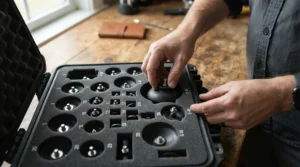
Keep a labeled bin or cart near a treatment table, with cups sorted by size, a pump or two, a few towels, gloves, and cleaning supplies. Pump kits like the KS Premium 19-Cup Cupping Set suit this layout because trainers can treat quickly and swap cups without waiting on batteries.
Hygiene and care
Cups touch skin, so clean them between athletes according to the manufacturer’s instructions. Nonporous plastic and silicone are far easier to maintain than anything porous.
Scope of practice and documentation
Rules about who may perform cupping vary by state and by credential. Confirm yours before offering it. Log each session (area, duration, suction level, skin response) so you have a record if an athlete reacts unexpectedly. A Therabody TheraCup helps standardize dosing across staff because its settings are fixed and its timer is built in.
Recovery Cupping Tools for Sports Teams: Sizing Kits and Team Sports Equipment Budgets
Recovery cupping tools for sports teams work best as a small, mixed fleet rather than one cup per athlete.
How many kits does a roster need?
A roster of 25 rarely needs 25 sets. Sessions are short and sequential, so two pump kits plus one or two electric units usually cover a busy training room. Add a few silicone sets like the KangZhu 12-Cup Silicone Cupping Set for road trips.
Team sports equipment budgets: cost per use
Here’s an illustrative calculation. A kit costing about $30 and used three times a week across a 30-week season sees roughly 90 uses, or about 35 cents per use. A premium unit in the $150–$200 range used on the same schedule lands near two dollars per use. Both are tiny next to most budget lines.
| Tier | Example Setup | Approx. Cost | Best For |
|---|---|---|---|
| Starter | MUCHOO 22-Cup Set + KangZhu 12-Cup Silicone Set | Under about $70 total | Small programs, travel |
| Core | 2 × KS Premium 19-Cup Set + REVO 4-in-1 Smart Cupping Massager | Roughly $140–$160 total | Single-trainer rooms |
| Premium | 2 × pump kits + Therabody TheraCup | Roughly $230–$280 total | Larger rosters, standardized dosing |
Notice that the premium tier costs about the same as a single mid-range foam-and-percussion bundle. For team sports equipment budgets, the smartest move is a core setup first, then adding the Therabody TheraCup once staff confirm the athletes actually use cupping.
Athletic Training Room Equipment: Where a Cupping Set Fits
Think of athletic training room equipment as tiers. At the top sit expensive anchors like compression boots and hydrotherapy. In the middle sit percussion guns and electrotherapy. At the bottom sit low-cost, high-flexibility tools: foam rollers, bands, tape, and cups.
A cupping set belongs in that bottom tier. It costs little, takes minimal space, and offers a hands-on option when staff are stretched thin. It also gives athletes who dislike foam rolling a different way to work on tight spots.
Spend first on what your athletes use daily. If the training room already has basic soft-tissue tools, adding MUCHOO 22-Cup Set-style kits stretches the budget further than another expensive gadget. And if your staff won’t use something consistently, it doesn’t belong on the shelf, however good its spec sheet looks.
Post-Exercise Recovery Protocols: Where Cupping Belongs
Post-exercise recovery protocols should start with fundamentals: cool-down, hydration, food, and sleep. Cupping is a layer on top, not a replacement.
The research picture is cautiously encouraging. A 2025 study on different negative-pressure levels in delayed onset muscle soreness examined pain, functional recovery, and inflammatory markers after high-intensity exercise. That suggests pressure level matters, which is a good reason to prefer tools with adjustable or capped suction.
A sensible layered protocol looks like this:
- Immediately after training: cool-down, fluids, protein and carbohydrate intake.
- Within roughly 24 hours: a short cupping session on the sorest area, kept light.
- Later that day or night: light movement, then sleep priority.
No trial I found establishes an optimal timing window, so treat this as practical sequencing, not proven science. Hot and cold modalities, massage, and compression can sit alongside it. Just avoid stacking everything into one exhausted evening.
Cupping Set for Post Workout Muscle Recovery: A Step-by-Step Usage Guide
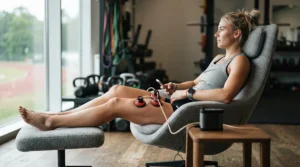
Using a cupping set for post workout muscle recovery is simple, but small habits make it safer.
Setup (first session):
- Check the skin for cuts, sunburn, or irritation. Skip any area that isn’t intact.
- Clean and dry the skin. If you’re gliding with silicone, add a little massage oil.
- Start at the lowest suction. With a KangZhu 12-Cup Silicone Cupping Set, squeeze lightly. With a REVO 4-in-1 Smart Cupping Massager, begin at a low level.
- Keep first sessions to about 3 to 5 minutes per spot.
- Remove slowly by breaking the seal at the cup’s edge.
Maintenance schedule: wash and dry cups after each use, inspect pump seals monthly, and recharge electric units before long weeks.
Common mistakes in the first 30 days: too much suction too soon, too many minutes per spot, cupping directly over bone, and treating the same area daily. Roundups generally suggest once or twice weekly for maintenance and more only during heavy training blocks. Mild circular marks are normal, but pain or blistering isn’t.
Real-World Scenarios: Matching the Right Cupping Set to Your Athlete Profile
Scenario 1: The college sprinter on a tight budget. Hamstrings tighten after speed days, and the budget is around $50. A KangZhu 12-Cup Silicone Cupping Set or KS Premium 19-Cup Cupping Set covers it, with a teammate helping on the back.
Scenario 2: The solo weekend marathoner. Long runs leave quads and calves tight, and nobody is home to pump a cup. The REVO 4-in-1 Smart Cupping Massager fits because it runs by itself and heat feels welcome after a long effort.
Scenario 3: The high school athletic trainer with 40 athletes. A roughly $250 line item and one busy training room point to two pump kits plus a Therabody TheraCup. The pump kits provide volume, while the Therabody TheraCup provides consistent, capped dosing.
Scenario 4: The traveling swimmer. Space is scarce and flights are frequent, so silicone wins. The KangZhu 12-Cup Silicone Cupping Set slides into a swim bag without a second thought.
Cupping Set vs Foam Rollers and Percussion Guns
| Tool | How It Works | Typical Cost | Best For |
|---|---|---|---|
| Cupping set | Suction lifts tissue | Under $40 to roughly $200 | Hard-to-reach spots, variety |
| Foam roller | Body-weight compression | Low | Large muscle groups |
| Percussion gun | Rapid pulses | Mid to high | Quick warm-up and spot work |
| Compression boots | Sequential pressure | High | Legs after heavy volume |
Cupping lifts tissue, while rolling and percussion compress it. That difference matters, because some athletes find the lifting sensation more tolerable on sore areas. A systematic review of cupping in musculoskeletal and sports rehabilitation rated the evidence as low to moderate and noted that it may reduce pain and improve blood flow, which keeps expectations honest. The sensible takeaway is to treat cupping as one tool among several. A Therabody TheraCup or a pump set doesn’t replace rolling, and rolling doesn’t replace cupping.
Safety, Contraindications, and Compliance
Cupping is generally low-risk when used conservatively, but it isn’t risk-free. Roundups advise avoiding open wounds, sunburn, and broken skin. People who are pregnant, have bleeding disorders, or take blood thinners should talk with a healthcare provider first.
Mild circular marks are normal and usually fade, but higher suction produces darker marks. Don’t chase marks as a sign of success.
The same review that rated evidence low to moderate also analyzed adverse effects, so read it before building a protocol. In a team setting, document consent for minors and follow your institution’s policies. Avoid wet cupping at home. Finally, don’t promise medical outcomes in marketing or conversations with athletes, since the evidence doesn’t support firm claims.
FAQ
❓ How long should I leave cups on after a hard workout?
❓ Can I use a cupping set every day?
❓ Is silicone or plastic better for a first-time athlete?
❓ Do darker cupping marks mean the session worked better?
❓ How much should a high school program budget for cupping tools?
Conclusion
The right cupping set for athletes and recovery isn’t the fanciest one. It’s the one that matches who holds the cup and how often you’ll use it. Solo athletes will probably love the REVO 4-in-1 Smart Cupping Massager or Therabody TheraCup, trainers will get the most from the KS Premium 19-Cup Set or MUCHOO 22-Cup Set, and travelers should pack a KangZhu 12-Cup Silicone Set. If you want to test electric cupping cheaply, the Soapow Electric Cupping Set and Achedaway Cupper are worth reading up on.
Keep your expectations honest. The research is modest, the protocols are still being refined, and cupping works best layered on top of sleep, nutrition, and smart training. Used lightly and consistently, though, it’s a cheap, flexible addition to any recovery routine or training room.
✨ Ready to build your recovery kit?
🔍 Click any highlighted product name to check current pricing and availability, and pick the cupping set that fits your body, your team, and your budget. 🏅
Recommended for You
- Silicone Cupping Set Vs Glass Cupping Set: 7 Best Picks (2026)
- Glass Cupping Set For Traditional Fire Cupping: 7 Best Picks 2026
- Silicone Cupping Set For Sports Massage Therapists: 7 Proven (2026)
Disclaimer: This article contains affiliate links. As an Amazon Associate, I earn from qualifying purchases. If you purchase products through these links, we may earn a small commission at no additional cost to you.
✨ Found this helpful? Share it with your friends! 💬🤗
