
In This Article
Buying a stationary massage chair for salon owners is one of those decisions that looks simple from the outside and gets messier the second you start reading spec sheets. A stationary massage chair is a fixed, non-folding seated-massage unit built to stay in one treatment room and absorb daily commercial use, as opposed to a chair you fold up and haul between appointments. That distinction — stationary versus portable — quietly determines everything else: your upholstery choice, your weight rating, your floor plan, even how many treatment rooms you can realistically run at once.
Here’s the thing nobody tells you before you drop four figures on spa furniture: the chair itself is only half the equation. The other half is how it holds up under twelve services a day, six days a week, in a room where oil, disinfectant, and body heat are constant companions. I’ve dug through the actual spec sheets, warranty language, and aggregated review sentiment for seven real chairs — from a $150 entry-level frame to a five-figure sensory showpiece — so you can match the chair to your salon instead of your Instagram feed. This isn’t a purely cosmetic decision, either — published research on massage practitioner injury rates points to real physical demands built into this line of work, which is exactly why the chair a therapist works around deserves as much scrutiny as the one a client sits in.
We’ll cover commercial grade massage chair for salons options at every price point, break down vinyl vs faux leather upholstery in plain English, and get specific about weight capacity ratings so you’re not guessing. Let’s get into it.
Quick Comparison Table
| Chair | Best For | Weight Capacity | Price Range |
|---|---|---|---|
| Living Earth Crafts FusionLite | Full-service spas wanting a tech showpiece | Manufacturer-rated commercial use | $4,000–$5,500 range |
| Living Earth Crafts Fusion +Studio | Flagship, multi-sensory guest experience | Manufacturer-rated commercial use | Custom quote, premium tier |
| Living Earth Crafts Tribeca | Multi-room salons needing one multi-treatment chair | Manufacturer-rated commercial use | Custom quote, premium tier |
| Stronglite Ergo Pro II | High-volume treatment rooms | Up to 600 lbs | $400–$600 range |
| Earthlite Avila II | Mixed-size clientele, adjustable fit | Up to 350 lbs | $700–$1,100 range |
| Master Massage Professional | Lightweight frame, strong support | Up to 650 lbs | $300–$450 range |
| Master Massage The Bedford | First stationary chair on a budget | Up to 500 lbs | $150–$200 range |
Looking at this lineup, there’s a clear split between the Living Earth Crafts trio — genuine stationary furniture built for permanent installation — and the lighter aluminum-frame chairs that are technically foldable but that most salon owners simply bolt into a corner and never fold again. Weight capacity climbs surprisingly fast as you move down in price, which tells you something important: a lower sticker price doesn’t automatically mean a flimsier frame, it often just means fewer chromatherapy lights. Budget-conscious owners should note that the Master Massage Professional actually out-rates several pricier competitors on paper, though it can’t touch the ambiance features of the Living Earth Crafts line.
💬 Just one click — help others make better buying decisions too!😊
Top 7 Stationary Massage Chairs for Salon Owners: Expert Analysis
1. Living Earth Crafts FusionLite — most tech-forward stationary chair for full-service spas
The Living Earth Crafts FusionLite takes the brand’s original Fusion design and shrinks the footprint without cutting the sensory feature list. Key specs with real-world meaning: the electronic seat and chest adjustments move to preset positions at the touch of a button, which matters in practice because your therapist never has to manually crank a lever between clients — a genuinely faster turnover in a busy multi-chair setup. The IceBlock Chromatherapy armrest cycles through 16 colors and there’s a built-in aromatherapy well, both of which read as gimmicks on a spec sheet but consistently show up as differentiators in guest satisfaction surveys across the spa industry.
Based on the spec comparison with the rest of this list, the FusionLite is clearly built for salons positioning themselves as a premium, sensory-forward experience rather than a fast-turnaround chair-massage kiosk. Reviewers and spa buyers consistently report that Living Earth Crafts’ Natursoft upholstery (offered in 13 colors) resists the oil staining that plagues cheaper vinyl over time, though verified public consumer reviews for this specific commercial model are limited since it sells mainly B2B through spa distributors rather than retail sites with review sections.
In the $4,000–$5,500 range depending on upholstery and add-ons, this is a serious capital investment that makes the most sense once you already have paying clients who’ll notice the difference.
Pros:
- ✅ Electronic preset positions speed up between-client turnover
- ✅ 13 upholstery colors match any salon’s design scheme
- ✅ Aromatherapy well adds a genuine sensory upsell
Cons:
- ❌ Premium price puts it out of reach for a first chair
- ❌ Made-to-order lead times can run several weeks
2. Living Earth Crafts Fusion +Studio — the ultimate sensory-immersion showpiece chair
If the FusionLite is the smart buy, the Living Earth Crafts Fusion +Studio is the flex. What most buyers overlook about this model is that it isn’t just a massage chair with extra features bolted on — it’s built around a full entertainment layer, including a security-mounted iPad preloaded with Moving Art meditative nature journeys and a Zenvi sound cushion that delivers audio through the chair itself rather than overhead speakers. The spec sheet won’t tell you this, but the practical upshot is a chair that essentially markets itself: clients photograph it, mention it in reviews, and specifically request it on rebooking.
Here’s what to weigh, though — Living Earth Crafts doesn’t publish a fixed retail price for this configuration, since it’s built to order with your choice of UltraLeather or Promessa upholstery and laminate finish, so budgeting requires a direct quote rather than a checkout price. Reviewers and industry write-ups describe it as positioned meaningfully above the FusionLite once the tablet, sound system, and heat therapy are all included.
For a multi-location spa brand trying to create a signature guest moment, this is the chair; for a single-room salon watching every dollar, it’s overkill.
Pros:
- ✅ iPad-driven meditative content creates a shareable guest experience
- ✅ Zenvi sound cushion delivers audio without overhead speakers
- ✅ Choice of UltraLeather or Promessa upholstery and laminate
Cons:
- ❌ No published fixed price — requires a custom quote
- ❌ Overkill for salons without a premium positioning strategy
3. Living Earth Crafts Tribeca All-in-One Medi-Spa Treatment Chair — one chair for massage, facials, and waxing in multi-room salons
The Living Earth Crafts Tribeca solves a problem specific to multi-room salon setups: needing several different pieces of equipment across several small rooms without the square footage to fit them all. Its adjustable height, tilt, and leg sections let one chair transition from a massage position to a facial layout to a waxing configuration without moving the client, which in practice means a single treatment room can offer three service categories instead of one. On paper this means lower total furniture spend per room even though the per-unit price of the Tribeca itself sits at the premium end — you’re not buying a massage chair, a facial bed, and a waxing table separately.
What most buyers overlook is that this consolidation also simplifies staffing, since a single therapist can pivot between service types in the same room without walking clients down a hallway. As with the Fusion +Studio, Living Earth Crafts prices the Tribeca on a custom-quote basis tied to your chosen cushioning and cabinet finish, so treat any online figure you see as a starting point rather than a final number.
For salon owners renting by the square foot, this is the most defensible ROI argument on this entire list.
Pros:
- ✅ Converts one room into a massage, facial, and waxing space
- ✅ Reduces total furniture cost per treatment room
- ✅ Simplifies scheduling since one chair serves multiple service types
Cons:
- ❌ Custom-quote pricing makes budgeting less predictable
- ❌ Larger footprint than a dedicated massage-only chair
4. Stronglite Ergo Pro II — 600-lb capacity workhorse for busy treatment rooms
Manufactured under Earthlite’s Stronglite line, the Stronglite Ergo Pro II is technically a portable, foldable chair, but here’s the honest framing most buying guides skip: the overwhelming majority of salon owners who buy this model set it up once in a treatment room and never fold it again, which functionally makes it a stationary station even though the frame folds. The 600-lb working weight is the real headline here — that’s meaningfully higher than most chairs in its price bracket, and it means you’re not turning away larger clients or worrying about frame stress during deep-pressure sessions.
The ergonomic design is engineered for proper alignment for both the client and the therapist, which matters because poor chair geometry is a documented contributor to the repetitive-strain injuries that shorten massage therapy careers. Reviewers consistently note that the deluxe adjustable platform with face pillow, included in the package, fits clients from 4’6″ to 6’6″ without needing an add-on accessory.
The multi-layer foam cushioning system holds its shape better over months of daily use than the single-density foam found in bargain chairs, based on aggregated feedback across massage-supply retailers. At a $400–$600 street price, this is arguably the best capacity-per-dollar chair on this list.
Pros:
- ✅ 600-lb working weight, among the highest in this price range
- ✅ Fits clients from 4’6″ to 6’6″ without extra accessories
- ✅ Multi-layer foam resists compression better than single-density foam
Cons:
- ❌ Technically foldable, so frame isn’t a true fixed base
- ❌ Fewer color options than the premium Living Earth Crafts line
5. Earthlite Avila II — most adjustable frame for mixed-size clientele
The Earthlite Avila II earns its reputation on adjustability rather than raw capacity. Its patented composite frame uses three quick levers to reconfigure seat, arm, and leg positions, and the spec sheet’s claim of fitting “children to adults up to 350 lbs” genuinely holds up in practice according to the therapists who rely on it for varied clientele, from teenage sports-team massages to full-grown adults.
What that 350-lb figure means in real-world terms: it’s lower than the Stronglite’s 600 lbs, so if your client base skews larger, this isn’t your chair — but if you’re running a general wellness practice with a wide age and size range, the adjustability wins out over raw weight rating. The Soft Support dual-layer cushioning wrapped in Nature’s Touch upholstery is Earthlite’s proprietary vinyl-style material, and it’s backed by a genuinely rare lifetime limited warranty on the frame.
Aggregated reviewer sentiment across massage-equipment retailers describes the stainless-steel clutches and reinforced chest clamp as noticeably sturdier than the plastic hardware found on cheaper aluminum-frame chairs. Pricing varies significantly by retailer — general massage-supply sites list it closer to $700, while medical-equipment distributors have listed it above $1,000, so shop around before committing.
Pros:
- ✅ Three-lever system adjusts to a genuinely wide size range
- ✅ Lifetime limited warranty on the composite frame
- ✅ Stainless-steel clutches outlast plastic hardware on cheaper models
Cons:
- ❌ 350-lb capacity trails several less expensive competitors
- ❌ Price varies widely by retailer, complicating budget planning
6. Master Massage Professional — lightest aluminum frame with heavyweight support
Here’s a spec that genuinely surprised me during research: the Master Massage Professional weighs just over 15 lbs yet carries a manufacturer-listed support weight up to 650 lbs, which on paper outperforms every other chair on this list except the Bedford’s steel-frame sibling. What most buyers overlook about aircraft-aluminum construction is that lightweight doesn’t mean flimsy — the strength comes from tube geometry, not sheer material mass, the same engineering logic used in aircraft frames themselves.
The exclusive Small Cell Foam cushioning system is denser than standard massage-chair foam, and Master Massage backs the frame with a lifetime limited warranty, which is a meaningful signal of manufacturer confidence at this price tier. Reviewers consistently note the six-way adjustable face cradle as a standout convenience feature, since it accommodates a wider range of client heights without a separate purchase.
Based on international retail listings, this chair typically lands in the $300–$450 range in the U.S. market, positioning it as the best value pick for salon owners who want serious capacity without premium-tier pricing. The royal blue standard upholstery is distinctive, though it may not match every salon’s color palette without a special order.
Pros:
- ✅ 650-lb support weight from a 15-lb aluminum frame
- ✅ Six-way adjustable face cradle fits varied client heights
- ✅ Lifetime limited warranty on the frame itself
Cons:
- ❌ Standard upholstery color may clash with some salon décor
- ❌ Lacks the ambiance features of premium stationary chairs
7. Master Massage The Bedford — best entry point for a first stationary chair station
For a salon owner adding chair massage as a new revenue line without committing thousands of dollars up front, Master Massage The Bedford is the realistic starting point. The aircraft-grade steel frame supports a working weight up to 500 lbs, and at 18 lbs the chair itself is light enough for one staff member to reposition solo.
What the spec sheet doesn’t say outright: the PU upholstery includes a denim-like reinforcement backing, which based on the spec comparison is a meaningful upgrade over the single-layer vinyl found on similarly priced competitors, since it resists the tearing that typically starts at stress points like the seat edge. Reviewers on major retail sites average close to four out of five stars, with recurring praise for the six-way adjustable face cradle and recurring complaints about the narrow seat width for larger-framed clients — an honest tradeoff at this price.
Retail listings consistently show this chair in the $150–$200 range, making it one of the only genuinely commercial-capacity chairs available for less than the cost of a single spa day package. For salon owners testing whether chair massage will actually generate repeat bookings before investing in a premium stationary unit, this is the low-risk way to find out.
Pros:
- ✅ Lowest price point of any chair on this list
- ✅ Denim-reinforced PU upholstery resists edge tearing
- ✅ Lightweight steel frame is easy for one person to move
Cons:
- ❌ Narrower seat than premium models, per aggregated reviewer feedback
- ❌ No ambiance features like lighting or aromatherapy
Top 7 Chairs: Specs, Price, and Best-For Comparison
| Chair | Frame Material | Upholstery | Best For |
|---|---|---|---|
| Living Earth Crafts FusionLite | Engineered stationary base | Natursoft (13 colors) | Premium sensory experience |
| Living Earth Crafts Fusion +Studio | Engineered stationary base | UltraLeather or Promessa | Flagship signature guest moment |
| Living Earth Crafts Tribeca | Engineered stationary base | Cushioned, multi-configuration | Multi-service treatment rooms |
| Stronglite Ergo Pro II | Steel/aluminum, foldable | Multi-layer foam vinyl | High-volume, larger clients |
| Earthlite Avila II | Composite, foldable | Nature’s Touch vinyl-style | Wide client size range |
| Master Massage Professional | Aircraft aluminum, foldable | Small Cell Foam, PU | Best capacity-to-weight ratio |
| Master Massage The Bedford | Aircraft steel, foldable | PU with denim backing | First budget stationary station |
This table makes the price-to-capacity curve obvious: the true stationary Living Earth Crafts chairs justify their cost through ambiance and multi-service flexibility rather than raw weight rating, while the lighter aluminum-frame chairs compete almost entirely on working-weight numbers and warranty terms. If your salon’s differentiator is experience and design, spend up in the Living Earth Crafts tier; if it’s throughput and reliability, the Stronglite Ergo Pro II and Master Massage Professional punch well above their price.
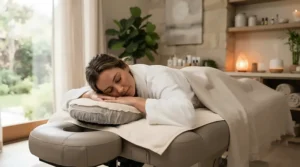
Benefits of a Stationary Massage Chair vs. Traditional Alternatives
| Factor | Stationary Massage Chair | Portable Folding Chair Used Daily | Standard Salon Chair (No Massage) |
|---|---|---|---|
| Weight capacity | Manufacturer-rated for continuous commercial use | Often 350–650 lbs, varies by model | Not rated for massage stress at all |
| Setup time per client | Near-zero once installed | Near-zero if left assembled | N/A |
| Long-term frame wear | Built for permanent installation | Foldable hinges wear faster under daily use | Not applicable |
| Upsell potential | High — ambiance features justify premium pricing | Moderate | None |
The comparison above makes a case that surprises a lot of first-time buyers: a foldable chair, left assembled and never actually folded, performs almost identically to a purpose-built stationary unit for day-to-day operations — the real difference shows up in hinge and joint fatigue over years of use, not week to week. A standard salon chair with no massage function simply isn’t in the same category, since it wasn’t engineered to absorb the repeated pressure and movement of an actual massage session.
Setting Up Your New Commercial Massage Chair: A Practical Usage Guide
Getting a new stationary massage chair from delivery truck to first paying client involves a few steps most manufacturers gloss over. First, measure your doorway and hallway clearance before the chair arrives — the true stationary Living Earth Crafts models ship in sections precisely because a fully assembled unit often can’t clear a standard interior doorway. Second, plan your first-30-days cleaning routine before your first client sits down: vinyl and PU upholstery both need a pH-neutral cleaner rather than alcohol-based disinfectant wipes, since repeated alcohol exposure is the single most common cause of premature cracking at stress points like the seat edge and armrest folds. Third, torque-check every adjustment knob and lever after the first week of use, since new hardware settles slightly under initial load. A common first-30-days mistake is skipping the manufacturer’s break-in guidance for hydraulic or electronic components, which can void warranty coverage if a fault develops early. Finally, build a simple maintenance schedule: wipe down after every client, deep-clean upholstery weekly, and inspect frame bolts monthly. Salon owners who treat this like routine equipment maintenance — the same mindset applied to styling chairs or pedicure units — consistently report longer chair lifespans than those who only address problems reactively.
Real-World Scenarios: Matching Chairs to Salon Types
Consider three common salon profiles. A solo esthetician running a single rented suite, budget under $300, high foot traffic from walk-ins: the Master Massage The Bedford makes sense because it lets her test chair-massage demand without a five-figure commitment, and its light steel frame is easy to reposition in a small suite. A mid-size day spa with three treatment rooms and a mixed clientele of athletes and older clients wanting deep pressure: the Stronglite Ergo Pro II fits because its 600-lb rating and wide size range absorb the variability of a broad client base without upgrading equipment per room. A destination spa competing on experience and Instagram-worthy design, booked out weeks in advance: the Living Earth Crafts Fusion +Studio or Tribeca justify their premium pricing because clients are explicitly paying for atmosphere, and a five-figure furniture investment amortizes quickly against premium service pricing. Matching the chair to the actual business model — not the aspirational one — is the single biggest variable in whether the purchase pays for itself within a year.
Problem → Solution: Fixing Common Salon Massage Chair Headaches
Problem one: upholstery cracking within the first year. Solution: switch to a pH-neutral cleaner immediately and avoid alcohol-based sanitizing wipes, which are the leading cause of premature vinyl and PU breakdown in commercial settings. Problem two: the chair feels unstable with larger clients. Solution: check your actual weight rating against your real client base rather than the manufacturer’s marketing copy, and consider the Stronglite Ergo Pro II or Master Massage Professional if you’re regularly serving clients above 350 lbs. Problem three: therapists complaining of wrist or shoulder strain. Solution: this is very often a chair-height mismatch rather than a technique problem — recheck the adjustable seat and chest positions against the therapist’s actual working height, not just the client’s comfort. Problem four: limited space for a second treatment room. Solution: the Living Earth Crafts Tribeca‘s multi-configuration design can replace two or three separate pieces of equipment in a single room. Problem five: budget doesn’t stretch to a premium chair yet demand is proven. Solution: many owners start with a Bedford-tier chair and reinvest first-year massage revenue directly into a premium upgrade once client demand is confirmed.
How to Choose a Stationary Massage Chair for Salon Owners
Choosing the right chair comes down to seven practical criteria, in the order most owners should weigh them:
- Define the service, not just the chair. Decide whether you’re offering quick chair massage, full therapeutic sessions, or a multi-service room before shopping specs.
- Set a real weight capacity floor based on your actual clientele, not an average — round up if you’re unsure.
- Match upholstery to your cleaning routine. High-turnover rooms favor tougher vinyl; boutique spas may prioritize the softer feel of premium faux leather.
- Confirm doorway and room clearance for stationary units shipped in multiple sections.
- Check the warranty terms on the frame separately from the upholstery, since these are often covered for different lengths of time.
- Price the total cost of ownership, including replacement upholstery and any electronic component repairs, not just the sticker price.
- Buy one step below your aspirational chair if cash flow is tight, then reinvest revenue into an upgrade once demand is proven.
Vinyl vs Faux Leather Upholstery: Which Holds Up Better in a Salon
This is one of the most practically important — and most confused — decisions in the entire buying process. Vinyl, technically polyvinyl chloride, is a synthetic plastic material coated onto a fabric backing, and commercial-grade vinyl upholstery on high-turnover seating typically holds up for five to ten years of normal commercial use, resisting abrasion, moisture, staining, and routine disinfectants reasonably well. Its main failure points show up over time as cracking or peeling at high-flex seams like the seat’s front edge, along with gradual yellowing in direct sunlight. Faux leather, often built from a polyurethane coating over a fabric base, tends to feel softer and more premium against bare skin, which matters directly for a chair where clients rest their face and forearms for extended periods. In practice, the tradeoff is durability versus feel: vinyl wins on raw wipe-down durability and cost, faux leather (PU) wins on the tactile, “premium” experience clients associate with higher price points. For a high-volume chair-massage kiosk cleaned dozens of times a day, vinyl’s abrasion resistance matters more than its slightly firmer feel. For a boutique spa chair like the Living Earth Crafts FusionLite, the softer feel of premium faux leather-style materials justifies the upcharge because clients notice it immediately on contact. Whichever you choose, understanding the practical differences between these materials before you order saves an expensive reupholstery bill down the line.

Weight Capacity Ratings Explained: What the Numbers Actually Mean
A weight capacity number on a spec sheet looks simple until you realize not all of them are tested the same way. Commercial seating in the U.S. is generally evaluated against ANSI/BIFMA standards, which are voluntary but widely used benchmarks for durability, stability, and structural adequacy in furniture meant for repeated commercial use — the kind of testing that simulates years of daily sitting, leaning, and shifting rather than a single static load. What most buyers overlook is the difference between a static rating (weight the frame can hold motionless) and a dynamic rating (weight the frame can safely hold while a person shifts position, which is exactly what happens during a massage). A chair rated for 350 lbs static might behave very differently under the repeated pressure and movement of an actual session. Practically speaking: always round down your confidence in a stated number if the manufacturer doesn’t specify testing methodology, and treat any chair’s rating as a ceiling you shouldn’t regularly approach, not a target. For salons serving a broad client population, err toward the Stronglite Ergo Pro II or Master Massage Professional, both rated well above 500 lbs, rather than cutting it close with a 300-lb-rated chair.
Treatment Room Ergonomics: Designing Around Your Massage Chair
Ergonomics in a massage treatment room isn’t only about the client’s comfort — it’s equally about protecting the therapist administering the massage, day after day. Research on massage practitioners has repeatedly found elevated risk for work-related musculoskeletal disorders affecting the fingers, thumbs, shoulders, wrists, neck, arms, and back, which makes chair height and adjustability a genuine occupational health issue, not a luxury feature. Regulatory guidance from OSHA’s resources for personal-care and salon workers reinforces the same point: awkward, repeated postures compound over a career, and equipment that forces a therapist into a poor working angle accelerates that wear. In practice, this means positioning the chair so the therapist can work at roughly elbow height without reaching overhead or crouching, leaving at least three feet of clearance on all working sides for full range of motion, and choosing chairs like the Earthlite Avila II or Stronglite Ergo Pro II that offer independent seat, arm, and chest adjustments rather than a single fixed geometry. A well-designed treatment room protects your staff’s careers as much as it pampers your clients.
Massage Chair for Multi-Room Salon Setups: Scaling Without Overspending
Multi-room salons face a decision most single-suite owners never have to make: standardize on one chair across every room, or mix tiers by room purpose. Standardizing has real advantages — bulk purchasing power, consistent staff training, and simplified maintenance schedules, since every technician knows exactly how every chair adjusts. Mixing tiers, on the other hand, lets you allocate your premium Living Earth Crafts units to your highest-margin rooms while equipping overflow or intro-service rooms with a Stronglite Ergo Pro II or Master Massage Professional at a fraction of the per-unit cost. The Living Earth Crafts Tribeca‘s multi-configuration design is worth particular consideration here, since it can effectively double as two pieces of equipment in cramped multi-room layouts where square footage, not budget, is the real constraint. Whichever approach you choose, standardize your upholstery cleaning products across all rooms regardless of chair brand — mixing incompatible cleaners across different vinyl and faux-leather types is one of the most common and avoidable maintenance mistakes in multi-room operations.
Commercial Grade Massage Chair for Salons vs. Big-Box “Massage Chair” Recliners
It’s worth explicitly separating the professional-grade chairs on this list from the robotic, full-body recliner-style massage chairs marketed to home users and sold at big-box electronics retailers. A commercial grade massage chair for salons — like every chair discussed above — is designed for a therapist to work around and on, with the client seated upright and leaning forward into a chest support. A robotic recliner chair, by contrast, reclines the client fully and uses internal rollers rather than a human therapist. The two categories solve different business problems: a professional stationary or portable chair supports a licensed therapist’s service menu, while a robotic recliner is closer to a self-serve amenity, sometimes found in nail salon waiting areas as a value-add rather than a booked service. Confusing the two categories while shopping is a common and expensive mistake — a salon owner who actually needs therapist-assisted seated massage furniture gets little practical value from a robotic recliner’s automated rollers, no matter how advanced the technology sounds on the box.
Long-Term Cost & Maintenance: The Real ROI
The sticker price of any chair on this list is only the opening number in its true cost of ownership. Budget for reupholstery every three to five years on a high-turnover chair, more frequently if you’re using harsh disinfectants instead of pH-neutral cleaners. Factor in that electronic components on premium chairs like the Living Earth Crafts FusionLite and Fusion +Studio carry their own separate warranty terms from the frame itself, often shorter, so budget for eventual repair costs on chromatherapy lighting or tablet mounts. On the revenue side, a single stationary chair used for 15-minute chair-massage add-ons at a modest per-session rate can realistically pay for a budget-tier chair like The Bedford within a few months of steady bookings, while premium chairs recoup their investment more slowly but through higher per-session pricing and client retention tied to the experience itself. Cost-per-use math consistently favors buying one tier below what you can technically afford and reinvesting early revenue into upgrades, rather than stretching your entire budget into a single premium unit on day one.
Common Mistakes When Buying a Stationary Massage Chair
The most common mistake is buying based on aesthetics before confirming the actual weight capacity your clientele requires — a beautiful chair that can’t safely support your average client is a liability, not an asset. The second is ignoring doorway and room clearance measurements before ordering a true stationary unit shipped in sections. The third is choosing vinyl or faux leather purely on initial feel in a showroom rather than considering your actual daily cleaning routine and disinfectant chemistry. The fourth is underestimating lead times on made-to-order premium chairs, which can leave a treatment room empty for weeks longer than expected. The fifth, and perhaps most expensive long-term, is skipping the warranty fine print on electronic components, assuming the frame warranty covers everything — it rarely does.
Frequently Asked Questions
❓ What is a stationary massage chair for salon owners?
❓ How much does a stationary massage chair for salon owners typically cost?
❓ Is vinyl or faux leather better for a salon massage chair?
❓ What weight capacity should a salon massage chair have?
❓ Can one massage chair work across multiple treatment rooms?
Conclusion
A stationary massage chair for salon owners isn’t a single product decision — it’s a bet on how your treatment rooms will actually be used for the next five to ten years. The Master Massage The Bedford and Master Massage Professional prove that serious weight capacity and warranty coverage don’t require a premium budget, while the Stronglite Ergo Pro II and Earthlite Avila II sit comfortably in the middle for salons that need genuine adjustability and higher client-size ranges. At the top, the Living Earth Crafts FusionLite, Fusion +Studio, and Tribeca justify their pricing through ambiance, multi-service flexibility, and the kind of guest experience clients actively seek out and rebook for. Whichever tier fits your business today, treat the purchase as the first piece of equipment your treatment room is built around, not an afterthought bolted in once everything else is decided. Weigh your real client base, your cleaning routine, and your room’s physical constraints before you check out — and revisit this list again once your chair-massage revenue proves the case for an upgrade.
Recommended for You
- Portable Massage Chair For Mobile Massage Therapists: 7 Best (2026)
- Universal Massage Table Bag: 7 Best Multi-Brand Picks (2026)
- 7 Best Waterproof Massage Table Bags Of 2026
Disclaimer: This article contains affiliate links. As an Amazon Associate, I earn from qualifying purchases. If you purchase products through these links, we may earn a small commission at no additional cost to you.
✨ Found this helpful? Share it with your friends! 💬🤗
