In This Article
Your back doesn’t care that the client loved their session. It just remembers the six flights of stairs, the chair you wrestled out of a hatchback, and the fifteen minutes you spent fighting a stuck lever while a client waited in their kitchen. If you’ve ever done outcalls, you already know that the right portable massage chair for mobile massage therapists isn’t a luxury — it’s the piece of equipment standing between a sustainable career and a chiropractor’s bill with your own name on it.
This guide skips the marketing fluff and gets into what actually matters for people who load a chair into a trunk several times a week: real weight numbers, real working-capacity ratings, and honest trade-offs between the aluminum-framed workhorses and the budget folders that get the job done for less. We researched seven real, currently sold chairs — from ultra-light 15-pound frames to 600-pound-capacity workhorses — and broke down who each one actually suits. Whether you’re building a solo practice out of your car or scaling a corporate chair-massage route, you’ll find a fit here, along with the comparison data, setup tips, and buying framework to choose with confidence. Prices shown are ranges only, since retailer pricing shifts constantly — always check current price before buying.
What Is a Portable Massage Chair for Mobile Massage Therapists?
A portable massage chair for mobile massage therapists is a lightweight, foldable seated-massage chair — typically 15 to 25 pounds — built with an aluminum or composite frame so it can be carried in a case, set up in minutes at a client’s home or office, and folded flat again for transport. Unlike a stationary spa chair, it’s engineered around portability first: quick-release adjustments, a padded face cradle, and a working weight capacity usually between 300 and 600 pounds. According to Wikipedia’s overview of the format, this style of chair is specifically designed to give a therapist easy access to a client’s head, neck, shoulders, and back without requiring the client to undress — which is exactly why it dominates corporate chair-massage events, home visits, and pop-up wellness setups.
Quick Comparison Table: Portable Massage Chairs at a Glance
| Chair | Chair Weight | Working Capacity | Price Range | Best For |
|---|---|---|---|---|
| Master Massage Professional | 15.2 lbs | 1,000 lbs | $300-$400 | Lightest carry, heaviest rating |
| Master Massage Bedford | ~20-25 lbs | 500 lbs | Under $250 | Budget-conscious beginners |
| Custom Craftworks Melody | 18 lbs | 300 lbs | $300-$350 | Smallest folded footprint |
| Oakworks Portal Pro | 19 lbs | 350 lbs | $430-$480 | Tight car trunks |
| Earthlite Avila II | 22-25 lbs | 350 lbs | $580-$700 | Long sessions, plush comfort |
| Stronglite Ergo Pro II | 24 lbs | 600 lbs | $550-$700 | High-volume, heavier clients |
| DR.LOMILOMI Ultra-Lite | 18 lbs | 600 lbs | $300-$350 | Backpack-style carrying |
Looking at the spread above, the pattern is clear: you’re always trading off between chair weight, working capacity, and price, and no single model wins on all three fronts. Budget-conscious therapists gravitate toward the Master Massage Bedford, while therapists working with plus-size or athletic clientele will lean toward the higher working-capacity options like the Stronglite Ergo Pro II or DR.LOMILOMI Ultra-Lite. Notice, too, that a low chair weight doesn’t automatically mean a low working capacity — the Master Massage Professional proves you can get both in the same package, though usually at a mid-tier price.
✨ Found a favorite already? Keep reading — the deeper analysis below explains exactly why each pick earns its spot before you commit your money.
Top 7 Portable Massage Chairs for Mobile Massage Therapists: Expert Analysis
Coverage below spans budget, mid-range, and premium options, plus a couple of lesser-known picks that deserve more attention than they get. Every product name is bolded throughout so you can scan and jump straight to the one you’re curious about.
1. Master Massage Professional Portable Massage Chair — lightest frame relative to capacity
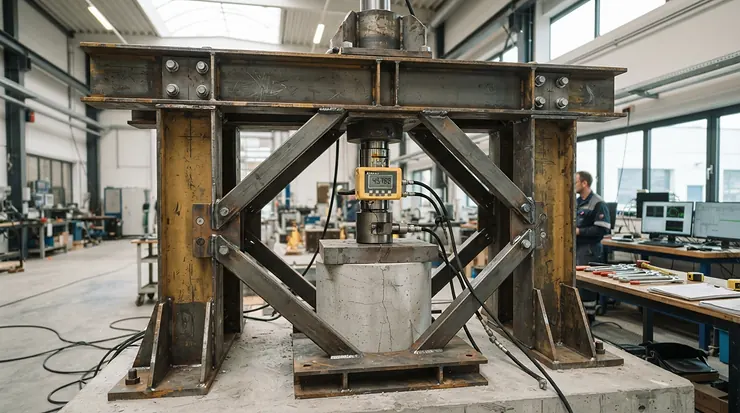
The headline number here is the gap between the chair’s own weight and what it can hold: Master Massage Professional weighs about 15.2 pounds but carries a manufacturer-rated working capacity up to 1,000 pounds. That ratio matters more than it sounds — a chair this light is genuinely easy to sling over a shoulder for a fourth-floor walk-up with no elevator, and the aircraft aluminum frame is what makes the low weight possible without sacrificing rigidity under a seated client.
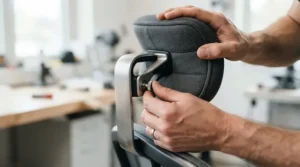
The six-way adjustable face cradle and small-cell foam cushioning on the sternum bolster, arms, and seat are consistent with what you’d expect from a chair built specifically for licensed practitioners and massage therapy students. Based on the spec comparison across this list, this is one of the few chairs that lets a smaller-framed therapist carry serious capacity without carrying serious weight.
Reviewers on major retail platforms consistently describe the setup as fast and the frame as sturdy for its size, though a few note the upholstery shows wear faster than pricier composite-frame alternatives.
Pros:
- ✅ Exceptionally light at roughly 15 lbs for easy one-hand carrying
- ✅ High-end working capacity accommodates a wide range of clients
- ✅ Six-way face cradle adjusts quickly between sessions
Cons:
- ❌ Upholstery reportedly wears faster than premium composite-frame chairs
- ❌ Fewer accessory ports than pricier Earthlite-family models
Expect a price in the $300-$400 range at the time of research; check current price before buying. For therapists prioritizing carry weight above almost everything else, this is hard to beat on value.
2. Master Massage Bedford Portable Massage Chair — best value for new mobile therapists
If you’re just starting a mobile practice and don’t want to sink $600 into equipment before you’ve booked your first ten clients, Master Massage Bedford is the sensible entry point. It’s built around an aircraft aluminum frame with Master Massage’s Multi-Layer Small Cell foam, which the company markets as denser than standard massage-chair padding — in practice, that translates to less “bottoming out” under a seated client during a 20-minute chair session. Working capacity sits around 500 pounds, which covers the overwhelming majority of clients a mobile therapist will see at corporate events or home visits.
What most buyers overlook about this model is that the six-way adjustable face cradle and included carrying case put it functionally close to chairs costing two to three times as much — the difference shows up in long-term durability and cushioning depth, not day-one functionality.
Aggregated reviewer sentiment across retail listings skews positive, with repeat mentions of easy assembly and surprising sturdiness for the price point; a recurring complaint is that the powder-coated finish can show scuffs after heavy daily use.
Pros:
- ✅ Genuinely budget-friendly for a new mobile practice
- ✅ Aircraft aluminum frame keeps weight low despite the price
- ✅ Six-way face cradle and carry case included in the package
Cons:
- ❌ Finish shows scuffs faster than premium alternatives
- ❌ Working capacity trails the higher-end picks on this list
Look for a price range under $250 depending on retailer and color option, with the caveat that prices may vary by season. This is the chair we’d point most students and part-time therapists toward first.
3. Custom Craftworks Melody Portable Massage Chair — smallest folded footprint
Custom Craftworks Melody solves a problem the bigger, heavier-duty chairs create: not everyone drives an SUV. At 18 pounds and with a compact 17.5″ x 50″ x 44.5″ footprint, this is one of the easiest chairs on this list to wedge behind a driver’s seat or into a hatchback trunk alongside a folding table. The working capacity of 300 pounds is the lowest of the seven featured here, which is the honest trade-off for the smaller frame — this isn’t the chair for a practice built around plus-size athletic clientele, but for general wellness and corporate chair-massage bookings it’s more than sufficient.
Here’s what to weigh: the arm height and angle adjustments, adjustable chest pad, and adjustable headrest give you nearly the same fit customization as pricier chairs, just packaged into a lighter, more compact shell.
Because independently verified customer review volume for this specific Custom Craftworks model is thinner than for the bigger Earthlite-family chairs, we can’t respond with the same confidence about long-term durability claims — what we can verify is the manufacturer’s stated load capacity and included accessory list.
Pros:
- ✅ Most compact folded dimensions on this list
- ✅ Full range of manual fit adjustments despite small size
- ✅ Comes packaged with carry case, chest pad, and sternum pillow
Cons:
- ❌ Lowest working capacity of the seven chairs reviewed
- ❌ Limited independently verified review volume compared to Earthlite models
Pricing typically falls in the $300-$350 range at the time of research. If trunk space is your binding constraint, this belongs on your shortlist.
4. Oakworks Portal Pro — best strength-to-weight ratio for tight trunks
Oakworks Portal Pro is the chair to look at when “compact massage chair for tight car trunks” is genuinely your top priority, not just a nice-to-have. At only 19 pounds, it holds up to 350 pounds — nearly 18 times its own weight — thanks to a tubular frame built from aircraft-quality aluminum manufacturing rather than a bulkier flat-panel design.
What most buyers overlook about this model is the 360-degree ergonomic access it offers to the cervical, thoracic, and lumbar spine, plus the scapula and shoulder regions — a genuinely useful feature if your technique involves working from multiple angles rather than staying planted behind the client. On paper this means less repositioning mid-session, which shaves real minutes off a tight back-to-back corporate schedule.
Aggregated reviewer sentiment from spa-equipment retailers describes the tubular frame as noticeably slimmer to carry than boxier competitors, though a handful of reviewers note the narrower profile takes a session or two to get used to for larger-framed clients.
Pros:
- ✅ Outstanding strength-to-weight ratio at 19 lbs for 350 lbs capacity
- ✅ Tubular frame is narrower and easier to wedge into small trunks
- ✅ 360-degree access supports varied hands-on techniques
Cons:
- ❌ Narrower seat profile may feel tight for larger-framed clients
- ❌ Working capacity is mid-pack, not top-tier
Expect pricing in the $430-$480 range depending on the retailer. If you drive a compact car and refuse to compromise on build quality, this is the one to test-fold before you buy.
5. Earthlite Avila II Portable Massage Chair — plushest comfort for longer sessions
Earthlite Avila II takes a different approach than the others on this list: instead of chasing the lightest possible weight, it optimizes for client comfort during longer sessions, which matters if your bookings run 45 to 60 minutes rather than quick 15-minute event slots. Its patented composite frame keeps chair weight around 22 to 25 pounds while supporting a 350-pound working capacity, and the dual-layer Soft Support cushioning system is noticeably thicker than the small-cell foam used on the budget models above.
Reviewers consistently note that the three quick-release levers make mid-session adjustments — repositioning a client for anterior chest or forearm work, for example — faster than chairs requiring multiple separate adjustment points. The built-in aromatherapy well and valuables pouch are small touches, but they’re the kind of detail that signals this chair was designed around the full client experience, not just transport logistics.
Based on the spec comparison, the trade-off is straightforward: you’re paying a premium for comfort engineering rather than for raw carrying capacity or minimal weight.
Pros:
- ✅ Dual-layer cushioning noticeably plusher for longer sessions
- ✅ Three quick-release levers speed up mid-session repositioning
- ✅ Includes aromatherapy well and valuables pouch as standard
Cons:
- ❌ Heavier and pricier than the budget-tier options on this list
- ❌ 350-lb capacity trails the Ergo Pro II and DR.LOMILOMI models
Pricing typically lands in the $580-$700 range at the time of research, positioning this firmly as a mid-to-premium investment. Therapists building a reputation on comfort-forward, longer sessions should weigh this one seriously.

6. Stronglite Ergo Pro II by Earthlite — highest working capacity for high-volume routes
For therapists running a genuinely high-volume mobile route — corporate wellness days, health fairs, back-to-back appointments — Stronglite Ergo Pro II is the workhorse option on this list. Co-designed with input from chair-massage pioneer David Palmer, it’s built on a heat-treated aluminum alloy frame rated for 1,200 pounds of static weight and 600 pounds of working capacity, the highest working-capacity figure among the seven chairs reviewed here.
At 24 pounds it’s not the lightest option, but the telescoping legs — which adjust to the therapist’s own height rather than only the client’s — are a detail that matters over an eight-hour day of back-to-back sessions, since they reduce the forward-bending posture that ergonomics researchers have flagged as a driver of therapist injury. The CloudFill memory-foam FacePillow is a genuine upgrade over standard foam face cradles, molding to individual face shapes rather than staying rigid.
Reviewers consistently praise the seat’s reversibility for leg, foot, or anterior torso work, and aggregated ratings on major retail platforms sit solidly in the 4.5-plus range.
Pros:
- ✅ Highest working capacity on this list at 600 lbs
- ✅ Telescoping legs adjust to therapist height, not just client size
- ✅ Reversible seat supports leg, foot, and anterior torso work
Cons:
- ❌ At 24 lbs, it’s among the heavier chairs featured here
- ❌ Premium price point compared to the budget-tier picks
Prices generally run in the $550-$700 range depending on color and retailer. If your practice leans toward higher client volume or a broader range of body types, this is the one to prioritize.
7. DR.LOMILOMI Ultra-Lite Aluminum Portable Massage Chair — best backpack-style carry system
DR.LOMILOMI Ultra-Lite is the pick that most directly answers the question of massage chair backpack straps for therapists, because the included case is genuinely designed as a two-way carry system — a single shoulder strap for quick trips, or dual backpack-style straps for longer walks, stairs, or anytime you need both hands free. The chair itself weighs about 18 pounds with a top-grade aluminum frame rated for up to 600 pounds of working capacity, matching the Ergo Pro II’s capacity in a notably lighter package.
The headrest cradle, arm rests, chest pad, seat, and kneeling pads are all independently adjustable, and the upholstery and cushioning are described by the manufacturer as meeting flame-retardant standards — a detail worth confirming if you work corporate venues with fire-code requirements. What the spec sheet won’t tell you, but the backpack-carry design implies, is that this chair was built with therapists who walk into buildings — rather than roll a case across a parking lot — specifically in mind.
As a newer entrant compared to the decades-old Earthlite and Master Massage brands, independently verified long-term durability data is thinner, so we’d weight the honest uncertainty here appropriately rather than overpromise. Pros:
- ✅ True two-way backpack-style carry case, not just a shoulder strap
- ✅ 600-lb working capacity at a light 18-lb chair weight
- ✅ Flame-retardant-rated upholstery per manufacturer specs
Cons:
- ❌ Newer brand with less long-term, independently verified review history
- ❌ Fewer accessory add-ons available compared to Earthlite’s ecosystem
Expect a price range around $300-$350 at the time of research. For therapists who regularly navigate stairs, sidewalks, or long building corridors, this is the most purpose-built option on the list.
Practical Usage Guide: Quick-Fold Setup Time and Your First 30 Days
Quick-fold setup time is the single most underrated spec on a portable massage chair for mobile massage therapists, because it’s the number that determines how many appointments you can realistically stack into a single afternoon. Most of the chairs above set up in roughly 60 to 90 seconds once you’ve practiced the sequence a handful of times — but that number only holds if you develop a consistent routine instead of relearning the levers every time. In your first 30 days, resist the urge to fully disassemble the chair between every single appointment; instead, get comfortable folding it into its travel position while leaving the major height and cradle settings close to your default so you’re only fine-tuning, not rebuilding, at each stop. A common first-month mistake is over-tightening quick-release levers out of habit from other equipment, which can strip the mechanism faster than intended. Wipe down the face cradle and armrests with a mild, non-alcohol cleaner after every client — most PU and vinyl upholstery on this list tolerates it fine, but check your specific chair’s care instructions first. Finally, build a maintenance rhythm: inspect the frame’s locking pins and hinges monthly for looseness, since a wobble that seems minor in your garage becomes a safety issue mid-session in a client’s living room.
Real-World Scenarios: Matching Chairs to Mobile Massage Practices
If you’re a massage therapy student doing weekend house calls to build clientele on a shoestring budget, the Master Massage Bedford or Custom Craftworks Melody make the most financial sense — you need reliable, adjustable equipment without a five-figure investment in your first year. If you’re an established therapist running a corporate chair-massage circuit that involves multiple office buildings in a single day, prioritize the DR.LOMILOMI Ultra-Lite for its backpack-style case, since you’ll be walking farther and more often than driving between sessions. And if you’re building a practice around home visits for clients recovering from injury or surgery — often larger-bodied, sometimes with mobility limitations — the Stronglite Ergo Pro II‘s 600-pound working capacity and therapist-height-adjustable legs reduce both liability risk and your own physical strain across a long day. A fourth profile worth naming: therapists who split time between a fixed studio and occasional outcalls might lean toward the Earthlite Avila II, since its comfort-forward design does double duty as a secondary studio chair on days it isn’t traveling.
How to Choose a Portable Massage Chair for Mobile Massage Therapists
- Confirm the working weight capacity against your actual clientele. Don’t buy based on the lightest chair weight alone — check that the working capacity comfortably exceeds the heaviest client you regularly see, with margin to spare.
- Weigh aluminum frame weight capacity against chair weight, not in isolation. A chair with a high working capacity but a heavier aluminum frame may still tire you out faster over a full carrying-and-setup routine than a lighter chair with a slightly lower rating.
- Test the face cradle adjustment range before buying if possible. A face cradle that adjusts tilt, height, and width independently accommodates a much wider range of client face shapes and neck lengths than a single-axis cradle.
- Time the actual fold-and-carry sequence, not just the marketed setup time. Manufacturer setup-time claims rarely include the walk from your car, so factor in real-world carrying distance at your typical venues.
- Match the carry case style to how you actually travel. A rolling case suits therapists who mostly work ground-floor venues with smooth flooring; a backpack-style case suits therapists navigating stairs, gravel, or long walks.
- Read aggregated review sentiment for long-term durability, not just initial comfort. Initial cushioning feel is easy to fake with marketing copy — recurring reviewer complaints about scuffing, hinge wear, or foam compression after months of use tell you more.
- Budget for accessories separately from the chair itself. Replacement face cradle covers, disinfectant-safe upholstery cleaners, and an extra carry strap are common add-on costs that don’t show up in the sticker price.
Lightweight Folding Massage Chair for House Calls vs Compact Massage Chair for Tight Car Trunks
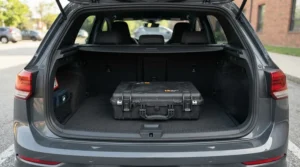
These two priorities sound similar but pull in slightly different directions, and understanding the distinction will save you from buying the wrong chair for your actual routine. A lightweight folding massage chair for house calls is optimized primarily for the walk from your car to the client’s door — think apartment buildings, walk-up units, or homes without driveway parking close to the entrance. Here, raw chair weight (the Master Massage Professional at 15.2 pounds, or the DR.LOMILOMI Ultra-Lite at 18 pounds) matters more than folded dimensions, since you’re carrying it a meaningful distance regardless of how compactly it packs down. A compact massage chair for tight car trunks, on the other hand, is optimized for folded footprint — how little space it eats up alongside a folding table, linens, and supplies in a small hatchback or sedan trunk. The Custom Craftworks Melody and Oakworks Portal Pro both win here on their narrower, more compact folded profiles, even though neither is the single lightest chair on this list.
| Priority | Best Match | Why It Wins |
|---|---|---|
| Longest carry distance to client | Master Massage Professional | Lightest chair weight at 15.2 lbs |
| Smallest trunk footprint | Custom Craftworks Melody | Most compact folded dimensions |
| Narrow frame for tight trunks | Oakworks Portal Pro | Slim tubular aircraft-aluminum design |
| Stairs and building walks | DR.LOMILOMI Ultra-Lite | Purpose-built backpack case |
The takeaway from this comparison is that “portable” isn’t one single quality — it splits into carry weight, folded size, and carry method, and the right chair depends on which of those three actually limits your workday. Therapists who drive a compact car but work mostly ground-floor venues should weight folded footprint heavily; therapists who valet-park or work upper-floor units should weight raw carry weight instead.
Massage Chair Backpack Straps for Therapists: Carrying Systems Compared
Not every portable chair ships with the same carrying philosophy, and the differences matter more than they first appear once you’re doing this daily rather than occasionally. Traditional rolling cases — the style bundled with the Earthlite Avila II and Stronglite Ergo Pro II — excel on smooth, flat ground: parking garages, office lobbies, tile hallways. But rolling cases become a liability the moment stairs, gravel driveways, or uneven sidewalks enter the picture, forcing you to lift a 20-plus-pound case awkwardly rather than roll it. Massage chair backpack straps for therapists solve exactly this problem by distributing the load across both shoulders and freeing your hands for a second bag, a doorknob, or simply your balance on stairs. The DR.LOMILOMI Ultra-Lite‘s two-way case is the clearest example on this list, converting between a single-shoulder sling and a true dual-strap backpack depending on the venue. What most buyers overlook about carry systems is that they’re rarely interchangeable between chair brands — a case built for one frame’s fold dimensions typically won’t fit another chair properly, so it’s worth confirming the carry style before you buy, not after.

Common Mistakes When Buying a Portable Massage Chair
One recurring mistake is buying based on price alone without checking the working weight capacity against real clientele — a $150 chair rated for 300 pounds becomes a liability the first time an athletic 250-pound client sits down with gear in their pockets. Another is ignoring the chair’s own weight entirely, assuming “portable” is a fixed category rather than a spectrum running from 15 to over 25 pounds — that ten-pound difference is meaningful after your fifth carry of the day. A third common error is skipping the face cradle adjustment test before purchase; a cradle that only tilts but doesn’t adjust height will leave some clients straining their neck, generating complaints that have nothing to do with your actual technique. Therapists also frequently underestimate how quickly cheap PU upholstery degrades under daily disinfectant use, leading to a false economy where a “budget” chair needs full reupholstering within a year. Finally, many new mobile therapists buy a rolling case by default without considering their actual venues — a rolling case is genuinely worse than a backpack-style case if your work regularly involves stairs or uneven ground.
Features That Actually Matter (And Those That Don’t)
Aluminum frame weight capacity is the feature that actually matters most, because it directly caps who you can safely and comfortably serve — a mismatch here isn’t cosmetic, it’s a liability and comfort issue that surfaces on your worst possible day, mid-session, in front of a client. Face cradle adjustment range matters nearly as much, since a poorly fitting cradle generates the single most common client complaint in chair massage: neck strain from an awkward head position. What matters less than marketing copy suggests: the specific color or upholstery pattern, which has zero bearing on function, and headline “number of adjustment points” claims that don’t specify whether those adjustments are independent or locked together. Aromatherapy wells and built-in valuables pouches, seen on the Earthlite Avila II, are genuinely nice touches but shouldn’t move the needle on a purchase decision if the core weight-capacity and cradle-adjustment specs don’t fit your needs first. Warranty length is worth checking but shouldn’t be over-weighted either — a lifetime frame warranty is only as good as the manufacturer’s continued business operations, so factor in brand longevity (Earthlite and Master Massage have both operated for decades) alongside the paper warranty terms.
Long-Term Cost & Maintenance
The sticker price is only the entry cost — total cost of ownership includes replacement face-cradle covers (typically needed every one to two years of heavy use), occasional foam or cushion replacement as padding compresses, and the carry case itself, which tends to show wear on zippers and straps well before the chair frame does. Higher-capacity aluminum-frame chairs like the Stronglite Ergo Pro II carry a higher upfront cost but historically show better resale value and longer usable life, based on the multi-decade track record of the Earthlite brand family, which offsets some of the initial premium over a multi-year practice. According to the Bureau of Labor Statistics, a substantial share of massage therapists are self-employed and travel to client homes or other sites as part of their work, which means equipment durability isn’t an abstract concern — it’s a direct input into how many billable sessions your gear can support before requiring replacement. Run a simple cost-per-session estimate: a $650 chair used for 500 sessions over its working life costs roughly $1.30 per session in equipment amortization alone, versus a $200 chair that needs replacing after 150 sessions at a comparable per-session cost but with more downtime risk in between.
Safety, Weight Ratings & Regulations for Mobile Massage Equipment
Working weight capacity ratings aren’t marketing fluff — they typically reflect a manufacturer’s tested static or dynamic load limit, and exceeding them repeatedly can stress hinges, welds, and locking mechanisms in ways that aren’t always visible until a failure occurs mid-session. Beyond equipment ratings, therapist body mechanics deserve equal attention: a federally supported study on massage therapist ergonomics examined the individual and organizational factors that influence whether therapists adopt self-care and injury-prevention techniques, underscoring that equipment choice is only one half of an injury-prevention strategy — posture, session pacing, and recovery habits make up the other half. Most states also require massage therapists to hold a license or certification to practice, so confirm your local licensing board’s stance on mobile or outcall work specifically, since some jurisdictions impose additional requirements — sanitation protocols, client intake documentation, or liability insurance minimums — for therapists working outside a fixed licensed premises. Always disinfect chair surfaces between clients per your state’s sanitation guidelines, and inspect frame hardware regularly rather than waiting for a visible failure.
Frequently Asked Questions
❓ What is the best portable massage chair for mobile massage therapists on a budget?
❓ How much weight can a portable massage chair for mobile massage therapists hold?
❓ How long does it take to set up a portable massage chair?
❓ Is an aluminum frame better than a steel frame for a portable massage chair?
❓ Do portable massage chairs come with backpack-style carrying cases?
Conclusion
There’s no single best portable massage chair for mobile massage therapists — there’s only the best chair for your specific route, your clientele’s typical build, and how far you actually have to carry it before you set it up. If weight is your enemy, the Master Massage Professional or DR.LOMILOMI Ultra-Lite deserve your attention first. If working capacity and long-term durability top your list, the Stronglite Ergo Pro II is the workhorse to beat. And if trunk space is genuinely your binding constraint, the Custom Craftworks Melody or Oakworks Portal Pro solve that problem more directly than raw weight specs ever will. Whatever you choose, treat the working weight capacity and face cradle adjustment range as non-negotiable checkpoints, not afterthoughts — they’re the two specs most likely to show up as a real problem mid-session rather than a minor inconvenience on the showroom floor.
Recommended for You
- Universal Massage Table Bag: 7 Best Multi-Brand Picks (2026)
- 7 Best Waterproof Massage Table Bags Of 2026
- Massage Table Case With Wheels: 7 Rolling Picks for 2026
Disclaimer: This article contains affiliate links. As an Amazon Associate, I earn from qualifying purchases. If you purchase products through these links, we may earn a small commission at no additional cost to you.
✨ Found this helpful? Share it with your friends! 💬🤗
